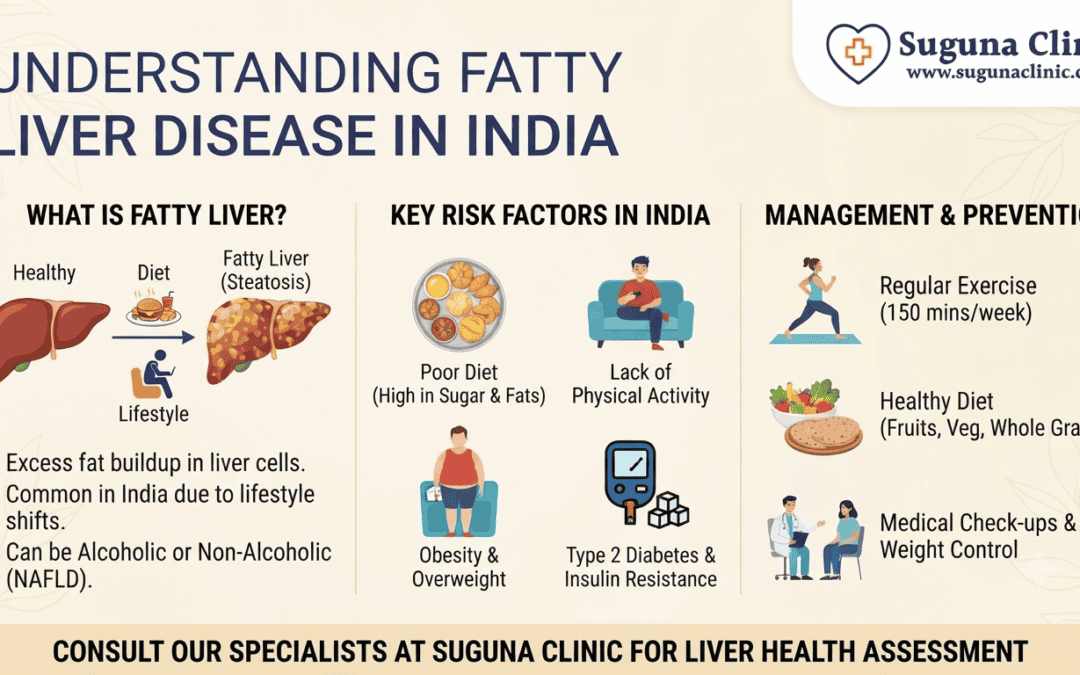
Fatty liver disease in India often comes to attention during testing for another problem. It is closely associated with diabetes and other metabolic risk factors.
Quick answer: Fatty liver may have no symptoms. Assessment focuses on the cause and the risk of liver scarring. Lifestyle changes can help, but improvement varies and reversal is not guaranteed.
What Is Fatty Liver Disease? (And Why the Name Just Changed)
Fatty liver means excess fat in liver cells. Metabolic dysfunction-associated steatotic liver disease (MASLD) describes liver steatosis with at least one cardiometabolic risk factor, after considering alcohol exposure and other causes. The older term NAFLD remains common in reports.
MASH, formerly called MASH, includes inflammation and liver injury. Fibrosis means scarring; advanced scarring is cirrhosis. These stages are not inevitable, and a scan showing fat alone does not establish the stage.
Why Fatty Liver Is So Common in India — Especially With Diabetes
Diabetes, abdominal adiposity and abnormal blood lipids commonly occur alongside fatty liver. A normal BMI does not exclude it. Indian prevalence estimates vary with the population and test used; individual care should focus on metabolic health and fibrosis risk.
Symptoms: Why It’s Called a “Silent” Disease
The overwhelming majority of people with fatty liver disease — including many with early MASH — have no symptoms at all. When symptoms do appear, they are usually vague and easy to miss:
- Mild fatigue
- A dull ache or sense of fullness in the upper right abdomen, under the ribs
- Unexplained mild elevation of liver enzymes on a routine blood test
Symptoms like jaundice, significant abdominal swelling, or marked weight loss generally only appear once the disease has progressed to advanced fibrosis or cirrhosis — which is precisely why relying on symptoms to detect this disease fails most people. Diagnosis depends on testing, not waiting to feel unwell.
Who Is Most at Risk
| Risk Group | Why |
|---|---|
| Type 2 diabetes or prediabetes | An important risk factor — insulin resistance directly drives fat storage in the liver |
| Central/abdominal obesity | Visceral fat around the abdomen is more strongly linked to fatty liver than total body weight or BMI alone |
| High triglycerides or low HDL cholesterol | Part of the same metabolic dysfunction that drives fat accumulation in the liver |
| PCOS | Insulin resistance associated with PCOS raises fatty liver risk independent of body weight |
| Underactive thyroid (hypothyroidism) | Slows metabolism and is independently associated with higher fatty liver risk |
| High intake of sugar-sweetened drinks and refined carbohydrates | Fructose in particular is converted to fat directly in the liver, more so than other sugars |
| Sedentary lifestyle | Physical inactivity independently worsens insulin resistance and liver fat, regardless of diet |
Getting Diagnosed: The Tests That Actually Matter
Three common assumptions lead people astray here, so it’s worth being direct about what each test can and can’t tell you:
- A normal liver enzyme test (ALT/AST) does not rule out fatty liver disease. A large proportion of people with confirmed fatty liver — including some with MASH — have completely normal blood liver enzymes. Enzymes are a useful clue when abnormal, but a normal result doesn’t mean the liver is fine.
- Ultrasound detects fat, but not scarring. A standard abdominal ultrasound is good at showing whether fat is present (“bright” or “echogenic” liver) but cannot reliably distinguish simple fatty liver from MASH, and can’t accurately stage fibrosis.
- Transient elastography (such as FibroScan) can help assess liver stiffness. This painless scan measures liver stiffness (a marker of fibrosis) and a fat-quantification score (CAP) in one sitting, giving a much clearer picture of both how much fat is present and whether scarring has begun — without a biopsy.
A simple blood-based calculation called the FIB-4 score (using age, AST, ALT, and platelet count) is increasingly used as a first-pass screening tool to decide who needs further testing like FibroScan. Liver biopsy — the historical gold standard — is now reserved for cases where non-invasive tests give an unclear picture.
Weight Loss Goals for Fatty Liver
For people with MASLD who are overweight, guideline targets include sustained loss of at least 5% to reduce liver fat, 7–10% to improve inflammation and at least 10% to improve fibrosis. These are treatment goals, not guarantees of reversal. People at a normal weight need an individual plan rather than automatic weight-loss advice.
Diet Changes That Help
- Cut sugar-sweetened drinks and fruit juice — the single most fatty-liver-specific dietary change, since fructose is processed directly into liver fat more efficiently than other sugars
- Reduce refined carbohydrates — white rice, maida-based foods, and packaged snacks in excess drive the same insulin resistance that fuels fatty liver
- Shift toward a Mediterranean-style pattern — more vegetables, legumes, whole grains, nuts, and fish; less red and processed meat — consistently shown to reduce liver fat independent of weight loss alone
- Increase fibre — dals, vegetables, and whole grains slow sugar absorption and support a healthier gut-liver relationship
- Coffee, in moderation, is one of the few things consistently associated with lower fatty liver progression — an interesting, well-replicated finding, though it’s not a substitute for the changes above
Exercise Helps the Liver — Even Without Weight Loss
One point often missed: regular exercise reduces liver fat to some degree even in people who don’t lose significant weight, likely by improving how muscles use insulin and glucose. A combination of aerobic activity (150 minutes a week of brisk walking, cycling, or swimming) and resistance training gives the best results — and the exercise habit itself supports the weight loss that produces the larger effects described above.
Is There a Medicine for Fatty Liver?
Medication decisions depend on diabetes, obesity, the stage of liver disease and locally approved treatments. A specialist may consider liver-directed or metabolic therapies in selected patients. Do not start vitamin E, herbal “liver cleanses” or other supplements without medical advice.
What Happens If Fatty Liver Goes Unaddressed
- Progression to MASH — ongoing inflammation that, over years, can silently damage liver architecture
- Fibrosis and eventually cirrhosis — scar tissue that impairs liver function, in a minority but meaningful proportion of untreated cases
- Increased cardiovascular risk — fatty liver disease independently raises the risk of heart attack and stroke, beyond the risk from diabetes or cholesterol alone
- Worsening diabetes control — the bidirectional relationship means an unmanaged fatty liver makes blood sugar control harder over time
- Increased risk of liver cancer — a real, if smaller, risk that rises substantially once cirrhosis develops
When to See a Doctor
- You have type 2 diabetes, prediabetes, or metabolic syndrome and have never had your liver checked
- An ultrasound or scan has ever mentioned “fatty liver,” “hepatic steatosis,” or a “bright liver” — even if it was described as mild or incidental
- Persistently elevated liver enzymes on a routine blood test
- Central obesity, high triglycerides, or PCOS, especially in combination
- A family history of diabetes, obesity, or liver disease
Frequently Asked Questions
Can liver blood tests be normal with fatty liver?
Yes. Normal liver enzymes do not exclude fatty liver or clinically important scarring.
Is reversal guaranteed with weight loss?
No. Improvement varies with disease stage and individual circumstances.
Can normal-weight people have fatty liver?
Yes. Metabolic risk and liver scarring need assessment regardless of BMI.
Sources and Further Reading
- EASL–EASD–EASO: MASLD clinical practice guideline
- NIDDK: Fatty liver treatment and lifestyle measures
This article provides general health information and does not replace an individual medical assessment.
Trackbacks/Pingbacks