[ez-toc] Quick AnswerThe best oncologists in HITEC City, Hyderabad include Dr. Sindhu Pericherla, Dr. Krishna Kiran Kannepalli, Dr. Ramachandra Nagaraju Chavali, Dr. Nikhil Suresh Ghadyalpatil and Dr. Trilok Pratap Singh Bhandari. Three practise at Apollo Hospitals,...
[ez-toc] Quick AnswerThe best nephrologists in HITEC City, Hyderabad include Dr. Seerapani Gopaluni, Dr. Krishna V Patil, Dr. Gandhe Sridhar, Dr. Sandeep Reddy Y and Dr. Sanjay Maitra. Four practise at Apollo Hospitals, Financial District, and one at Apollo Hospitals,...
[ez-toc] Quick AnswerThe best gastroenterologists in HITEC City, Hyderabad include Dr. Rohan P Reddy, Dr. Swathi G, Dr. Raghu D K, Dr. Ankit Vijay Agarwal and Dr. Jatin Yegurla. Two practise at Apollo Hospitals, Financial District, and three at Apollo Hospitals,...
[ez-toc] Quick AnswerThe best neurologists in HITEC City, Hyderabad include Dr. Sreekanth Vemula, Dr. Ranjith G, Dr. Venkata Sumanth Chava, Dr. Ponaganti Nishanth and Dr. Madhuri Khilari. Three practise at Apollo Hospitals, Financial District, one at Apollo Medical...
[ez-toc] Quick AnswerThe best cardiologists in HITEC City, Hyderabad include Dr. Sudheer Koganti, Dr. Pathuri Avinash, Dr. Nekkenti Venkata Rayudu, Dr. Tripti Deb and Dr. Ranga Reddy B V A. Two practise at Apollo Hospitals, Financial District, one at Apollo Medical...
[ez-toc] Quick AnswerThe best oncologists in Gachibowli, Hyderabad include Dr. Vamshi Krishna M, Dr. Arif Mohammed Khan, Dr. Avinash Bonda, Dr. Sohini Chattopadhyay and Dr. Krishna Kiran Kannepalli. Four are medical and haemato-oncologists at AIG Hospitals,...
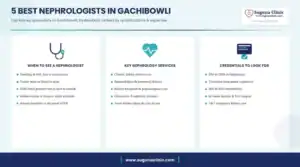
[ez-toc] Quick AnswerThe best nephrologists in Gachibowli, Hyderabad include Dr. Sai Ram Reddy, Dr. Rekha Paladugu, Dr. Sujith Reddy, Dr. Niharika Mulpuri and Dr. Seerapani Gopaluni. Four practise at AIG Hospitals, Gachibowli, and one at nearby Apollo Hospitals,...
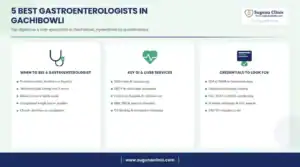
[ez-toc] Quick AnswerThe best gastroenterologists in Gachibowli, Hyderabad include Dr. D Nageshwar Reddy, Dr. Sundeep Lakhtakia, Dr. Mohan Ramchandani, Dr. Rakesh Kalapala and Dr. Rupa Banerjee, all at AIG Hospitals, Gachibowli, which began as the Asian Institute of...
[ez-toc] Quick AnswerThe best neurologists in Gachibowli, Hyderabad include Dr. Afshan Jabeen, Dr. Sreekanth Vemula, Dr. Ranjith G, Dr. Venkata Krishna Chaitanya Koduri and Dr. Venkata Sumanth Chava. Two practise at AIG Hospitals, Gachibowli, and three at nearby...
[ez-toc] Quick AnswerThe best oncologists in Jubilee Hills, Hyderabad, as listed by Apollo Hospitals, include Dr. S V S S Prasad, Dr. Trilok Pratap Singh Bhandari, Dr. Praveen Kumar Dadireddy, Dr. Nikhil Suresh Ghadyalpatil and Dr. Venkata V Sampath. They include...
Looking for a cancer specialist near Gachibowli? Compare 5 experienced oncologists at AIG Hospitals and Apollo Hospitals by qualifications and expertise.
Looking for a kidney specialist near Gachibowli? Compare 5 experienced nephrologists at AIG Hospitals and Apollo Hospitals by qualifications and expertise.
Looking for a brain specialist near Gachibowli? Compare 5 experienced neurologists at AIG Hospitals and Apollo Hospitals by qualifications and expertise.


 Looking for a cancer specialist near HITEC City? Compare 5 experienced oncologists at Apollo Hospitals by qualifications and expertise.