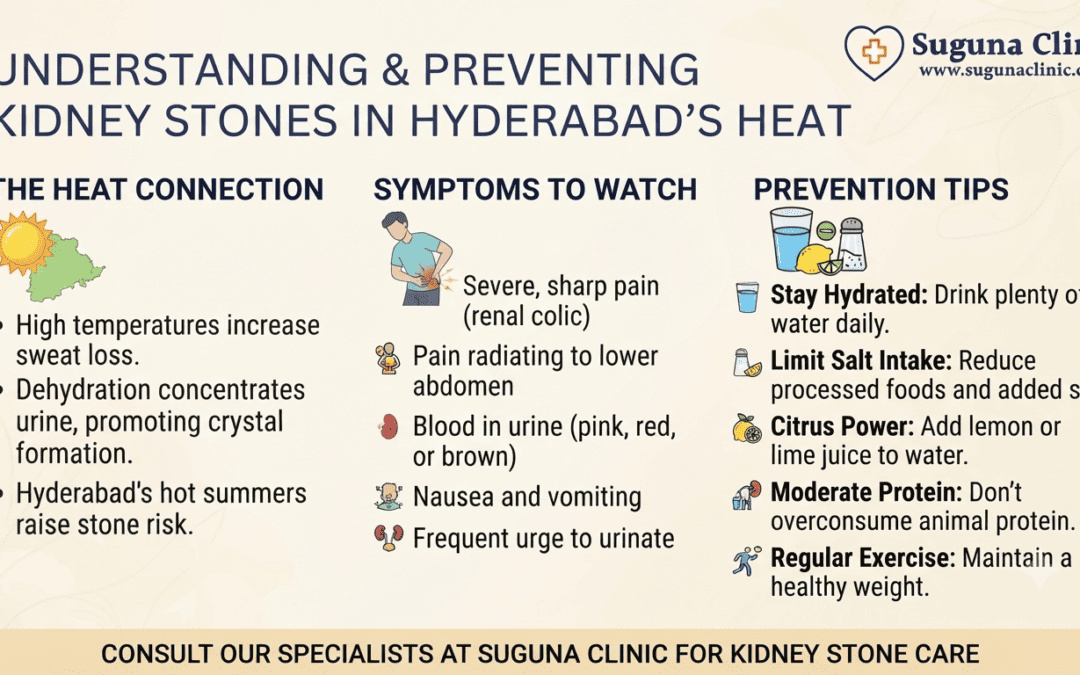
Kidney stones in Hyderabad can be a concern during hot weather when sweating increases fluid loss. This guide covers symptoms, assessment and prevention.
Quick answer: Low urine volume can favour stone formation. Sudden flank pain needs medical assessment; fever, chills or difficulty passing urine alongside pain require urgent care.
Why Heat and Dehydration Make Hyderabad a Genuine Risk Zone
Sweating during hot weather increases fluid loss. If this is not replaced, urine becomes more concentrated, which can favour stone formation. The amount to drink should reflect activity, climate and any medical fluid restrictions.
What Kidney Stones Actually Are
A kidney stone forms when minerals and salts in urine become concentrated enough to crystallise and stick together, rather than staying dissolved and passing out harmlessly. Different stone types form for different underlying reasons:
| Stone Type | How Common | Main Driver |
|---|---|---|
| Calcium oxalate | The most common type | Low fluid intake, high oxalate or sodium intake, low urine citrate |
| Uric acid | Second most common | Acidic urine, often linked to gout, high animal protein intake, or obesity |
| Struvite (infection stones) | Less common | Forms in the setting of certain urinary tract infections; can grow large quickly |
| Cystine | Rare | An inherited condition causing a specific amino acid to leak into urine |
Symptoms: Warning Signs You Shouldn’t Ignore
| Symptom | What It Feels Like |
|---|---|
| Renal colic (classic symptom) | Sudden, severe, wave-like pain in the flank or lower back, often radiating around to the lower abdomen or groin — frequently described as one of the most intense pains a person can experience |
| Blood in urine | Pink, red, or brown-tinged urine — sometimes visible only on a urine test, not to the naked eye |
| Urinary changes | Burning on urination, urgency, or frequent small-volume urination |
| Nausea and vomiting | Commonly accompanies severe renal colic, often adding to the initial confusion with a stomach problem |
| Restlessness | Unlike abdominal conditions where lying still helps, people with renal colic often can’t find a comfortable position and pace or writhe |
Fever or Chills With Flank Pain Is a Medical Emergency
If severe flank pain is accompanied by fever, chills, or feeling generally unwell, this can mean the stone has caused an infection trapped behind a blockage — a genuine emergency that needs immediate treatment, not a wait-and-see approach. Go to an emergency department promptly rather than waiting for a routine appointment.
Who Is Most at Risk
| Risk Group | Why |
|---|---|
| Outdoor workers and anyone with heavy sun exposure | High sweat loss without matching fluid intake concentrates urine directly |
| People who drink too little water generally | Low urine volume is the single biggest modifiable risk factor across all stone types |
| Family history of kidney stones | A first-degree relative with stones increases personal risk |
| High-sodium diets | Excess salt increases the amount of calcium your kidneys excrete into urine |
| High animal protein intake | Raises uric acid and calcium excretion while lowering protective citrate |
| Obesity | Associated with higher stone risk, partly through effects on urine chemistry and acidity |
| Gout or recurrent UTIs | Directly linked to uric acid and struvite (infection) stones respectively |
Getting Diagnosed
- Ultrasound — usually the first test, non-invasive, no radiation, good at detecting most stones and any blockage or swelling of the kidney
- Non-contrast CT scan (CT KUB) — the most accurate test for confirming stone size, number, and exact location, typically used when ultrasound is unclear or before planning treatment
- Urine test — checks for blood, infection, and urine pH, which helps point toward the likely stone type
- 24-hour urine collection — recommended for anyone with recurrent stones, or a first stone with risk factors, to identify the specific chemical imbalance driving stone formation and personalise prevention
Treatment by Stone Size
Size matters, but location, infection, blockage, kidney function and pain also determine treatment. Some small stones pass with monitoring and prescribed pain relief; others require a procedure. Do not force large amounts of water during severe colic or suspected obstruction.
A urologist may use shock-wave treatment, ureteroscopy or another procedure. Some uric acid stones respond to prescribed urine-alkalinising treatment. Fever with flank pain, inability to pass urine or uncontrolled vomiting needs urgent assessment.
Prevention Diet: What Actually Works
- Drink regularly, with a personalised fluid goal if you have heart or kidney disease.
- Reduce excess salt.
- Keep normal dietary calcium unless your clinician advises otherwise.
- Adjust oxalate and animal protein intake to the stone type; avoid unnecessary blanket food restrictions.
- Stone analysis and, when indicated, 24-hour urine testing help personalise prevention.
Recurrence: Why It’s Worth Changing After the First Stone
Stones can recur. Reviewing the stone type, fluid intake and relevant urine tests after the first episode can help guide prevention. Keep follow-up appointments even when symptoms resolve.
When to See a Doctor — or Seek Emergency Care
- Sudden, severe flank or lower back pain, especially if it comes in waves
- Visible blood in urine, or a urine test showing blood
- Burning, urgency, or frequent urination without an obvious cause
- Fever, chills, or feeling generally unwell alongside flank pain — treat as an emergency
- A previous stone, to discuss a 24-hour urine test and a personalised prevention plan
- Working outdoors or in high heat regularly, to review your fluid intake habits proactively
Frequently Asked Questions
Do small kidney stones always pass?
No. Passage depends on size, location and other factors. Follow-up is needed even if pain improves.
Should I avoid calcium foods?
Usually not. Normal dietary calcium may help prevent calcium oxalate stones; personalise advice to your stone type.
When is kidney stone pain an emergency?
Fever, chills, inability to pass urine or persistent vomiting with pain requires urgent assessment.
Sources and Further Reading
This article provides general health information and does not replace an individual medical assessment.