Prediabetes means your blood sugar is higher than normal but not yet in the diabetes range. It usually causes no symptoms, so most people find out only from a routine blood test. The good news is that this stage is a window of opportunity: the right changes to food, activity and weight can lower your chances of developing type 2 diabetes.
Quick answer
You have prediabetes if your fasting blood sugar is 100–125 mg/dL, your HbA1c is 5.7–6.4%, or your 2-hour glucose tolerance result is 140–199 mg/dL (American Diabetes Association criteria). About 1 in 7 adults in India (15.3%) has prediabetes. Large trials show that losing about 5–7% of body weight and walking at least 150 minutes a week can reduce the risk of progressing to type 2 diabetes, and many people return to normal blood sugar levels.
Last updated: September 2026 · Reading time: about 10 minutes
What Is Prediabetes?
Prediabetes is a stage where blood glucose (sugar) stays above normal but below the level used to diagnose diabetes. It usually develops because the body’s cells stop responding well to insulin (insulin resistance), and the pancreas cannot fully make up for it.
Doctors sometimes call it “borderline diabetes”, “impaired fasting glucose (IFG)” or “impaired glucose tolerance (IGT)”, depending on which test was abnormal. Prediabetes is not a disease label to fear. It is a warning that tells you the direction your blood sugar is moving while there is still time to change it.
How Common Is Prediabetes in India?
Prediabetes affects about 15.3% of Indian adults, or roughly 136 million people. This figure comes from the ICMR–INDIAB study, which tested more than 1,13,000 adults across 31 states and union territories and was published in The Lancet Diabetes & Endocrinology in 2023. The same study found diabetes in 11.4% of adults, so many Indians are already at, or close to, the diabetes threshold.
South Asians tend to develop insulin resistance at a lower body weight and younger age than many other populations. That is why a “normal-looking” person with a small belly can still have prediabetes, and why screening guidelines use a lower body mass index (BMI) cut-off of 23 for people of Asian ancestry.
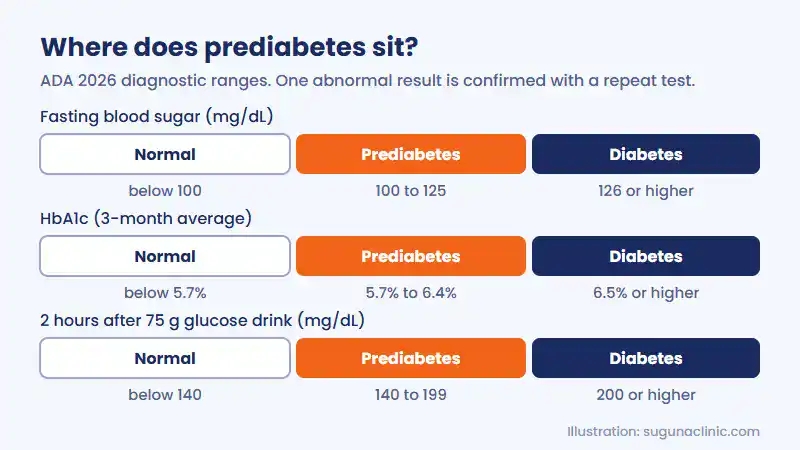
Prediabetes Range: Blood Sugar and HbA1c Values
Any one of the three tests below can identify prediabetes. The values follow the American Diabetes Association (ADA) Standards of Care 2026.
| Test | Normal | Prediabetes | Diabetes |
|---|---|---|---|
| Fasting plasma glucose | Below 100 mg/dL | 100–125 mg/dL | 126 mg/dL or higher |
| HbA1c | Below 5.7% | 5.7–6.4% | 6.5% or higher |
| 2-hour glucose after 75 g drink (OGTT) | Below 140 mg/dL | 140–199 mg/dL | 200 mg/dL or higher |
Good to know: Some Indian labs follow the World Health Organization cut-off for impaired fasting glucose (110–125 mg/dL), so your report may show a slightly different range. Reference ranges vary by lab, and illness, steroid medicines, anaemia or recent blood loss can affect results. Always have a doctor interpret your report. To understand HbA1c in detail, read What Is HbA1c? Normal Range and Target Levels.
Does Prediabetes Cause Symptoms?
Most people with prediabetes have no symptoms at all. A blood test is the only reliable way to know. However, some body signs and health conditions often go along with insulin resistance and are worth noticing:
1. Increasing waist size
Fat around the abdomen is closely linked to insulin resistance, even if your overall weight seems normal.
2. Dark, velvety skin patches
Darkened skin on the back of the neck, armpits or groin (acanthosis nigricans) can be a sign of insulin resistance.
3. Fatty liver on a scan
Fatty liver found on an ultrasound often goes along with prediabetes and deserves a blood sugar check. See our guide to fatty liver disease in India.
4. High blood pressure or cholesterol
These conditions often cluster with raised blood sugar as part of metabolic syndrome.
5. PCOS or past gestational diabetes
Women with polycystic ovary syndrome or diabetes during pregnancy have a higher chance of prediabetes later.
6. Small skin tags
Multiple small skin tags on the neck or eyelids are sometimes associated with insulin resistance.
None of these signs confirms prediabetes on its own, and many people with prediabetes have none of them. They are simply reasons to get a blood test.
⚠️ These are not prediabetes symptoms. They may mean blood sugar is already high. See a doctor promptly if you notice:
- Excessive thirst and passing urine very often, especially at night.
- Unexplained weight loss despite eating normally.
- Blurred vision, frequent infections or slow-healing wounds.
- Vomiting, deep or fast breathing, confusion or drowsiness with high sugar readings. This needs emergency care the same day.
Who Should Get Tested for Prediabetes?
The ADA recommends testing all adults from age 35, and earlier if you have overweight (BMI 23 or more for people of Asian ancestry) plus at least one risk factor. If the result is normal, repeat testing at least every 3 years, or sooner if your risk is higher.
- Family history: a parent, brother or sister with type 2 diabetes.
- Body weight: BMI 23 or above, or a large waist.
- Medical history: high blood pressure, high triglycerides or low HDL (“good”) cholesterol, heart disease, PCOS or fatty liver.
- Pregnancy history: gestational diabetes or a baby weighing more than 4 kg at birth.
- Lifestyle: mostly sitting through the day, poor sleep or smoking.
A fasting glucose and HbA1c test is often part of a routine health check. Our guide to a full body checkup after 30, 40 and 50 explains which tests are useful at each age.
What to Do After a Prediabetes Result
Don’t panic, and don’t ignore it. Follow these steps:
Heavy thirst, frequent urination, weight loss, blurred vision
Blood sugar may already be in the diabetes range
A repeat or second test and a check of BP, lipids and waist
Food swaps, 150 min/week of activity, 5–7% weight loss if overweight
Then at least once a year
If your doctor feels your risk is high
Can Prediabetes Be Reversed?
Yes, for many people prediabetes can be reversed or kept from progressing, though results vary from person to person. Two landmark trials show what is possible:
- Diabetes Prevention Program (USA, 2002): among 3,234 adults with prediabetes, a lifestyle programme aiming for at least 7% weight loss and 150 minutes of activity a week lowered the rate of new diabetes by 58% compared with placebo. The medicine metformin lowered it by 31%.
- Indian Diabetes Prevention Programme (Chennai, 2006): among 531 Asian Indian adults with impaired glucose tolerance, 55% of the control group developed diabetes within 3 years, compared with about 39% of those who followed lifestyle advice. The effect was seen even with modest weight change.
Lifestyle changes (first choice)
- Work for almost everyone
- Also improve blood pressure, cholesterol and fatty liver
- No side effects
- Need steady effort over months
Medicine (for selected people)
- Metformin may be considered for higher-risk people, especially adults aged 25–59 with a BMI of 35 or more, higher sugar values, or past gestational diabetes
- Needs a doctor’s assessment and monitoring
- Works best alongside lifestyle changes, not instead of them
Prediabetes Diet: Practical Indian Food Swaps
A prediabetes diet does not mean giving up rice or roti. It means smaller portions of refined carbohydrates, more vegetables and protein, and fewer sugary drinks. A simple guide is the “plate method”: half the plate vegetables, a quarter protein (dal, paneer, eggs, fish or chicken) and a quarter grains.
| Instead of | Try |
|---|---|
| A heaped plate of white rice | One cup of rice with extra dal, vegetables and curd, or part-millet (jowar, ragi, foxtail) |
| Sweet tea or coffee several times a day | Reduce the sugar step by step, and limit it to one or two cups |
| Fruit juice, soft drinks or packaged “health” drinks | Whole fruit (a guava, orange or apple), buttermilk or plain water |
| Samosa, biscuits or namkeen with tea | Roasted chana, sprouts chaat, peanuts or a boiled egg |
| Idli or dosa with only chutney | Add sambar with plenty of vegetables, or try pesarattu (moong dal dosa) |
| Large biryani portions often | An occasional smaller portion with raita and salad |
For fuller meal plans, see our diabetes diet guide for Indians. The same principles work well for prediabetes.
Activity, Sleep and Weight: What Makes the Biggest Difference
Move 150 minutes a week
Brisk walking for 30 minutes, 5 days a week, is enough to start. A 10–15 minute walk after meals also helps lower after-meal sugar.
Add strength work
Two sessions a week of simple exercises such as squats, wall push-ups or resistance bands help muscles use glucose better.
Aim for 5–7% weight loss
For someone weighing 80 kg, that is about 4–6 kg. This is a realistic target, not a crash diet. Read our sustainable weight loss plan.
Sleep 7–8 hours
Short or irregular sleep increases insulin resistance. Snoring with daytime sleepiness may point to sleep apnoea, which is worth checking.
Stop smoking
Smoking increases the risk of type 2 diabetes and adds to heart risk.
Sit less
If you work at a desk, stand up and move for a few minutes every 30–60 minutes.
Prediabetes Myths and Facts
| Myth | Fact |
|---|---|
| “Prediabetes is just a little sugar. It isn’t serious.” | Without changes, many people progress to type 2 diabetes, and raised sugar already adds to heart risk. |
| “Only overweight people get prediabetes.” | Indians often develop it at a lower weight, especially with belly fat or a family history. |
| “I must stop eating rice completely.” | Portion size, what you eat with the rice and overall calories matter more than removing one food. |
| “Karela juice or methi will cure it.” | No single food or herbal remedy has been shown to reverse prediabetes. Steady lifestyle change is what works. |
| “If I feel fine, my sugar must be fine.” | Prediabetes is usually silent. Only a blood test can tell. |
How Often Should You Repeat Tests?
| Situation | Suggested check |
|---|---|
| Normal result, no risk factors | Every 3 years from age 35 |
| Prediabetes | At least once a year (fasting glucose and/or HbA1c) |
| After starting lifestyle changes | Often rechecked after 3–6 months to see progress (HbA1c reflects about 3 months) |
| Alongside | Blood pressure, lipid profile, waist size and weight |
Seeing an after-meal reading close to 200 mg/dL? Read Blood Sugar 200 After Eating: Is It Normal?
Getting Checked for Prediabetes in Hyderabad
If a recent report shows a borderline sugar value, or you have a family history of diabetes, a general physician can confirm the result, check your blood pressure, cholesterol and waist, and help you set practical, achievable goals. At Suguna Clinic in Hyderabad, prediabetes assessment and follow-up are part of our diabetes care services.
Frequently Asked Questions
Is an HbA1c of 5.7% prediabetes?
Yes. HbA1c values from 5.7% to 6.4% are in the prediabetes range under ADA criteria. A doctor may repeat the test or add a fasting glucose to confirm, especially if you have anaemia or another condition that can affect HbA1c.
Is fasting sugar of 110 mg/dL normal?
No. A fasting glucose of 110 mg/dL is above normal and falls in the prediabetes range (100–125 mg/dL). It should be confirmed and followed up with lifestyle changes.
How long does it take to reverse prediabetes?
Many people see improvement in their numbers within 3 to 6 months of consistent changes, but the timeline varies. The goal is lasting habits, because blood sugar can rise again if old habits return.
Do all people with prediabetes get diabetes?
No. Not everyone with prediabetes develops diabetes, and the risk falls considerably with weight loss and regular activity. Some people return to normal levels, while others stay in the prediabetes range for years.
Do I need medicine for prediabetes?
Most people do not. Lifestyle change is the first step. A doctor may consider metformin for selected higher-risk people, but this is an individual decision that needs medical assessment.
Can I eat fruit if I have prediabetes?
Yes. Whole fruits are a healthy choice in sensible portions, for example one medium fruit at a time. It is better to limit fruit juices and very sweet fruits such as ripe mango or chikoo in large amounts.
Can young people or children have prediabetes?
Yes. Prediabetes is increasingly seen in young adults and in children with overweight, especially with a family history. A doctor can advise whether testing is needed.
Sources and Further Reading
- Anjana RM, et al. Metabolic non-communicable disease health report of India: the ICMR-INDIAB national cross-sectional study (ICMR-INDIAB-17). Lancet Diabetes Endocrinol. 2023;11(7):474-489.
- American Diabetes Association. 2. Diagnosis and Classification of Diabetes: Standards of Care in Diabetes—2026. Diabetes Care. 2026;49(Suppl 1):S27.
- Diabetes Prevention Program Research Group (Knowler WC, et al.). Reduction in the incidence of type 2 diabetes with lifestyle intervention or metformin. N Engl J Med. 2002;346:393-403.
- Ramachandran A, et al. The Indian Diabetes Prevention Programme shows that lifestyle modification and metformin prevent type 2 diabetes in Asian Indian subjects with impaired glucose tolerance (IDPP-1). Diabetologia. 2006;49(2):289-297.
This article provides general health information and does not replace an individual medical assessment. If you have symptoms or concerns, please consult a qualified doctor.