Heat stroke in Hyderabad is a medical emergency. Knowing the warning signs and starting cooling promptly can save a life during hot weather.
Quick answer: Confusion, collapse or seizures after heat exposure require immediate emergency help. Call 112 or 108 and start cooling. Do not wait for a thermometer reading.
Why Hyderabad’s Heat Is a Genuine Medical Risk
Hot weather, direct sun and strenuous activity can overwhelm the body’s ability to shed heat. Outdoor workers, older adults and people taking certain medicines need a heat plan. Follow current local weather and heat alerts rather than relying on a fixed seasonal temperature.
The Heat Illness Spectrum: Cramps → Exhaustion → Stroke
Heat-related illness isn’t a single condition — it’s a spectrum that can progress quickly if not addressed:
- Heat cramps — painful muscle spasms, usually in the legs or abdomen, from salt loss during heavy sweating; the mildest stage
- Heat exhaustion — the body is struggling to cool itself but hasn’t yet failed; heavy sweating, weakness, and dizziness, with the person still alert and responsive
- Heat stroke — the body’s cooling system has failed; core temperature rises dangerously and the brain is affected, causing confusion, fainting, or seizure — a true emergency
Heat stroke can develop rapidly, without a predictable sequence of earlier symptoms.
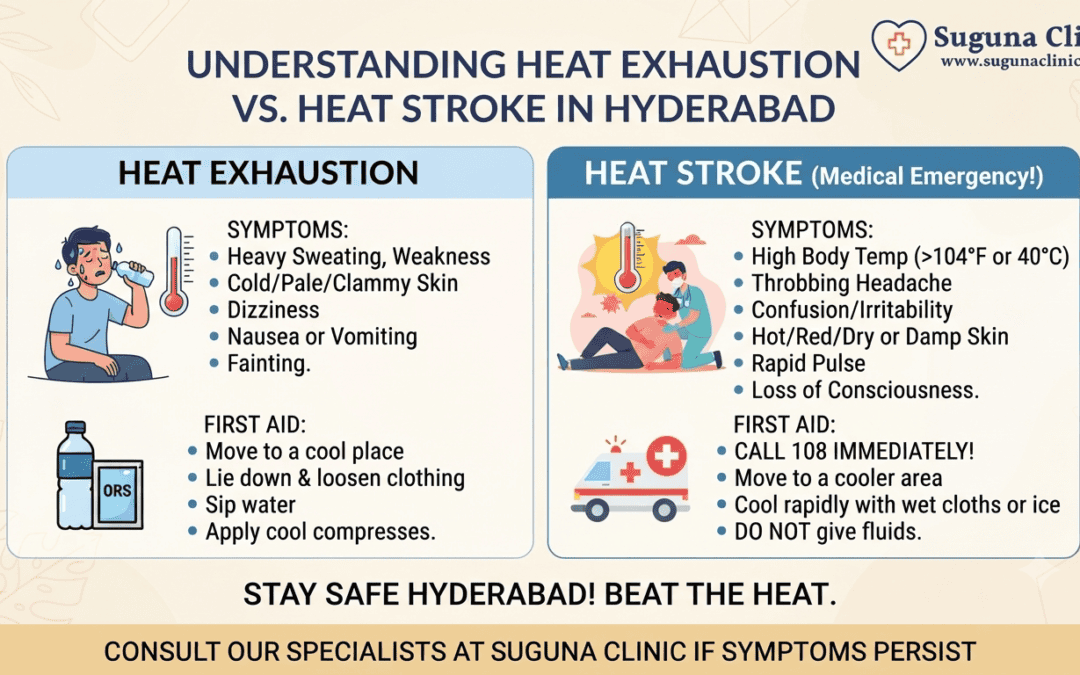
Heat Exhaustion vs. Heat Stroke: How to Tell Them Apart
| Feature | Heat Exhaustion | Heat Stroke |
|---|---|---|
| Core temperature | Below 40°C (104°F) | Often very high; do not wait for a specific reading |
| Mental state | Alert, though may feel dizzy or weak | Confused, slurring words, disoriented, fainting, or seizure — the key differentiator |
| Skin | Heavy sweating, skin cool and clammy or pale | Can be hot and dry or still sweaty — sweating alone doesn’t rule out heat stroke |
| Other symptoms | Headache, nausea, muscle cramps, fast pulse, thirst | Rapid, strong heartbeat; nausea/vomiting; possible loss of consciousness |
| Response to treatment | May improve with cooling and fluids; arrange medical assessment | Requires emergency medical cooling — does not resolve with rest alone |
Confusion Is the Sign That Changes Everything
A common and dangerous myth is that heat stroke always looks like “hot, dry skin with no sweating.” In reality, someone with heat stroke — especially from physical exertion — can still be sweating heavily. A crucial warning sign distinguishing heat exhaustion from heat stroke is mental state: confusion, slurred speech, disorientation, combativeness, fainting, or seizure. If you see any of these on a hot day, treat it as heat stroke and call 108 immediately — don’t wait to see if it resolves.
First Aid: What to Do Immediately
Suspected heat stroke
- Call 112 or 108 immediately.
- Move the person to a cooler place and remove excess clothing.
- Start cooling: wet the skin and fan it, or use cold-water immersion if it can be done safely with continuous support of the head and airway.
- Do not give anything by mouth to a confused, drowsy or unconscious person.
- Stay with them and follow the emergency dispatcher’s instructions.
Heat exhaustion
Stop activity, move to a cool place and loosen clothing. Small sips of cool water are appropriate only if fully alert and able to swallow. Arrange medical assessment; worsening symptoms, persistent vomiting or altered awareness require urgent help.
Who Is Most at Risk
| Risk Group | Why |
|---|---|
| Elderly adults | Reduced ability to sweat and sense thirst, often combined with chronic illness and medications that raise risk further |
| Outdoor workers, delivery staff, traffic police | Prolonged direct heat exposure without adequate breaks or fluids |
| Infants and young children | Less efficient temperature regulation and inability to communicate early symptoms; never leave a child in a parked vehicle, even briefly |
| People with diabetes or heart disease | Both conditions impair the body’s ability to regulate temperature and respond to heat stress |
| People on certain medications | Diuretics, some blood pressure medications, and certain psychiatric medications can impair sweating or increase fluid loss — check with your doctor before summer if you’re on regular medication |
| Anyone consuming alcohol in the heat | Alcohol worsens dehydration and impairs the body’s ability to sense overheating |
Prevention: Practical Steps for Hyderabad’s Summer
- Avoid outdoor activity between 11 AM and 4 PM — adjust plans to current local heat alerts
- Hydrate consistently through the day, not just when thirsty — thirst is a lagging indicator, especially in the elderly
- Keep ORS at home during summer months — it replaces lost salts more effectively than water alone during heavy sweating
- Wear light-coloured, loose, breathable clothing and a hat or umbrella for shade if you must be outside
- Avoid alcohol. Limit excessive caffeine and drink water regularly.
- Check on elderly relatives and neighbours during heat wave alerts — many don’t recognise their own risk or notice symptoms early
- Never leave anyone — especially children or pets — in a parked vehicle, even for a few minutes; vehicle interiors heat up extremely fast
When to Seek Emergency Care
- Confusion, slurred speech, disorientation, or unusual behaviour on a hot day — treat as heat stroke and call 108
- Fainting or loss of consciousness
- Seizure
- Vomiting that prevents keeping fluids down
- Heat exhaustion symptoms that don’t improve within an hour of rest, shade, and fluids
- Any heat-related symptoms in an infant, elderly person, or someone with a chronic condition — err on the side of earlier care in these groups
Frequently Asked Questions
Can someone with heat stroke still sweat?
Yes. Sweating does not rule out heat stroke.
Should I wait for a temperature above 40°C?
No. Confusion, collapse or seizures after heat exposure need immediate emergency help and cooling.
Can I give an unconscious person water?
No. Do not give anything by mouth; follow the emergency dispatcher’s instructions.
Sources and Further Reading
This article provides general health information and does not replace an individual medical assessment.