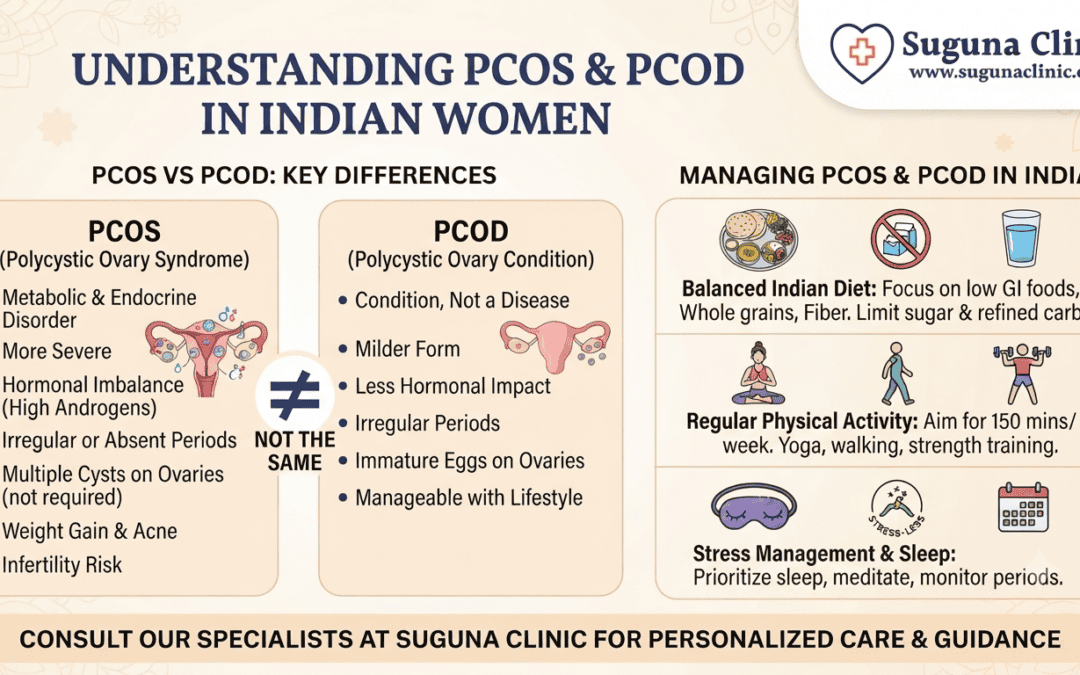
PCOS in Indian women can affect periods, skin, fertility and metabolic health. This guide explains symptoms, diagnosis and the link with diabetes risk.
Quick answer: PCOS is a hormonal and metabolic condition. Irregular periods, excess hair growth and acne warrant assessment, even at a normal body weight. Treatment depends on symptoms and pregnancy plans.
What Is PCOS? (And How It Differs From “PCOD”)
Polycystic ovary syndrome (PCOS) affects hormonal signalling and ovulation. In India, “PCOD” is often used informally for the same condition; it is not a reliable label for a separate, milder disease. Diagnosis and treatment should follow the clinical findings rather than the label.
Diagnosis: The Rotterdam Criteria
PCOS is diagnosed when a woman meets at least 2 of these 3 features, after ruling out other conditions that can look similar (such as thyroid disorders):
- Irregular or absent ovulation — showing up as irregular, infrequent, or absent periods
- Clinical or biochemical signs of excess androgens — such as acne, excess facial/body hair (hirsutism), or elevated testosterone on a blood test
- Polycystic-appearing ovaries on ultrasound — multiple small follicles, not the same as ovarian “cysts” in the way that term is commonly understood
This matters because having polycystic-looking ovaries on a scan alone, without the other features, does not mean you have PCOS — and conversely, some women with PCOS have normal-looking ovaries on ultrasound but meet the other two criteria. Ultrasound is not always needed when irregular cycles and hyperandrogenism are already present. Adolescent diagnosis requires different criteria and specialist interpretation.
Symptoms
| Category | Common Signs |
|---|---|
| Menstrual | Irregular, infrequent, prolonged, or absent periods |
| Androgen-related | Acne (often jawline/chin), excess facial or body hair, thinning hair on the scalp in a male-pattern distribution |
| Metabolic | Weight gain, especially around the abdomen; persistent difficulty losing weight despite effort; dark, velvety skin patches at the neck or underarms (acanthosis nigricans) — a visible marker of insulin resistance |
| Fertility | Difficulty conceiving, due to irregular or absent ovulation |
| Mood | Higher rates of anxiety and low mood are reported among women with PCOS, likely from a mix of hormonal and lived-experience factors |
How Common Is PCOS in India?
Prevalence estimates vary by population and diagnostic criteria. A percentage from one study should not be treated as the risk for every Indian woman. Irregular periods or androgen-related symptoms deserve assessment regardless of population estimates.
The Insulin Resistance Connection: Why PCOS Is a Metabolic Condition
PCOS is associated with insulin resistance and increased type 2 diabetes risk. Assessment may include blood glucose, blood pressure and cholesterol. These risks also occur in people who are not overweight.
Lean PCOS: When You’re Not Overweight But Still Have It
PCOS can occur at a normal body weight. A normal BMI does not rule it out, and weight loss is not an appropriate goal for everyone. Regular activity, balanced nutrition and symptom-specific treatment can still help.
Long-Term Health Risks If Untreated
- Type 2 diabetes — the insulin resistance underlying PCOS substantially raises lifetime diabetes risk if not addressed
- Cardiovascular disease — driven by the high rates of abnormal cholesterol and metabolic syndrome seen alongside PCOS
- Fatty liver disease — closely linked through the same insulin resistance pathway
- Endometrial (uterine) cancer risk — chronic anovulation means the uterine lining isn’t regularly shed, which over years can raise this specific cancer risk if periods remain very infrequent without treatment
- Pregnancy complications — including gestational diabetes and higher blood pressure risk during pregnancy
- Mental health impact — anxiety and low mood are more common, and often improve as physical symptoms are brought under control
Treatment: What Actually Helps
- Healthy eating and regular physical activity support health at every weight.
- Treatment for irregular periods and excess hair growth differs from treatment for fertility.
- Metformin may be considered for metabolic indications.
- Inositol has uncertain and limited clinical benefits; it should not be presented as an established substitute for metformin.
- A clinician can discuss hormonal treatment or fertility treatment according to individual goals.
When to See a Doctor
- Periods that are consistently irregular, very infrequent, or absent for several months
- New or worsening acne, excess facial or body hair, or scalp hair thinning
- Unexplained weight gain or persistent difficulty losing weight despite genuine effort
- Dark, velvety skin patches at the neck or underarms
- Difficulty conceiving after trying for 6–12 months
- A family history of PCOS or type 2 diabetes, even without symptoms yet
Frequently Asked Questions
Can PCOS occur at a normal weight?
Yes. Body weight alone cannot rule out PCOS or its metabolic risks.
Does an ultrasound alone diagnose PCOS?
No. Diagnosis considers cycle history, androgen-related findings and exclusion of other causes. Adolescents need different assessment criteria.
Is PCOS curable?
There is no established cure, but symptoms and longer-term risks can be managed.
Sources and Further Reading
This article provides general health information and does not replace an individual medical assessment.