Thyroid disorders are among the most common and most frequently missed health problems in India — particularly among women in Hyderabad. A persistently tired woman, gaining weight despite eating carefully, feeling cold when everyone else is comfortable, losing more hair than usual, and struggling with low mood — this is a pattern Dr. Ram Kumar sees every week. It is the pattern of hypothyroidism, and it responds beautifully to simple, well-monitored treatment.
Thyroid disease affects an estimated 42 million people in India, with women 5–8 times more likely to be affected than men. Despite this, it remains dramatically underdiagnosed — many patients in Gachibowli have lived with thyroid disorder symptoms for years without the diagnosis ever being made, because a simple TSH blood test was never ordered. Dr. Ram Kumar (MBBS, MD General Medicine, MPH USA) provides comprehensive thyroid assessment, accurate diagnosis, and evidence-based management of all thyroid conditions — from straightforward hypothyroidism to complex hyperthyroidism, thyroid nodules, and thyroid disease during pregnancy.

What Does the Thyroid Gland Do? Why It Matters So Much
The thyroid gland is a small, butterfly-shaped gland at the front of the neck. Despite its modest size, it acts as the body’s master metabolic regulator — producing two key hormones, thyroxine (T4) and triiodothyronine (T3), that control the rate at which virtually every cell in the body produces and uses energy.
Thyroid hormones influence:
- How fast the heart beats
- How efficiently food is converted to energy (metabolic rate)
- Body temperature regulation
- Bowel function and motility
- Brain function, mood, and cognition
- Hair growth and skin quality
- Menstrual cycle regularity and fertility
- Muscle strength and reflexes
- Cholesterol levels
When the thyroid produces too little hormone (hypothyroidism), everything slows down. When it produces too much (hyperthyroidism), everything speeds up. Both conditions produce wide-ranging symptoms that affect nearly every system in the body — which is why thyroid disease is so easy to confuse with other conditions when a TSH test has not been done.
Types of Thyroid Disorders Diagnosed and Treated
Hypothyroidism (Underactive Thyroid)
The most common thyroid disorder in India, affecting an estimated 10–11% of Indian women — yet a significant proportion remain undiagnosed. Hypothyroidism occurs when the thyroid gland does not produce enough thyroid hormone to meet the body’s needs, slowing down metabolism and organ function progressively over months to years.
The most common cause in urban India is Hashimoto’s thyroiditis — an autoimmune condition where the body’s immune system attacks the thyroid gland, gradually destroying its hormone-producing capacity. Other causes include previous radioiodine treatment or surgery for hyperthyroidism, radiation to the neck, iodine deficiency (less common since universal salt iodisation in India), and certain medications (amiodarone, lithium).
Hyperthyroidism (Overactive Thyroid)
Hyperthyroidism occurs when the thyroid produces excess thyroid hormone, accelerating metabolism. The most common cause is Graves’ disease — an autoimmune condition where antibodies (TSH receptor antibodies) stimulate the thyroid to produce excess hormone. Other causes include toxic multinodular goitre and toxic thyroid adenoma (a single hormone-producing nodule).
Thyroid Nodules
Thyroid nodules — small lumps or growths within the thyroid gland — are extremely common, found in up to 60% of people on ultrasound examination. The vast majority (more than 90%) are benign (non-cancerous). However, a small proportion can be malignant, and some produce excess thyroid hormone (toxic nodules). Every thyroid nodule discovered is assessed carefully to determine whether it requires monitoring, biopsy, or referral.
Goitre
A goitre is an enlarged thyroid gland — visible as a swelling at the front of the neck. It can occur with hypothyroidism, hyperthyroidism, or euthyroidism (normal thyroid function). Simple goitre often results from iodine deficiency, though it can also be autoimmune (Hashimoto’s or Graves’ disease).
Subclinical Thyroid Disease
Subclinical hypothyroidism — elevated TSH with normal T4 — is extremely common in Indian women. It may or may not cause symptoms. Whether and when to treat it is an important clinical decision that Dr. Ram Kumar makes individually based on the TSH level, symptom burden, antibody status, age, and whether the patient is pregnant or planning pregnancy.
Thyroid in Pregnancy
Thyroid disease during pregnancy requires special attention — both untreated hypothyroidism and hyperthyroidism can cause serious complications, including miscarriage, pre-eclampsia, preterm delivery, and impaired fetal brain development. Dr. Ram Kumar screens all pregnant women for thyroid dysfunction and manages thyroid disease during pregnancy with adjusted dose targets appropriate for each trimester.
Symptoms of Hypothyroidism: What Patients in Gachibowli Report
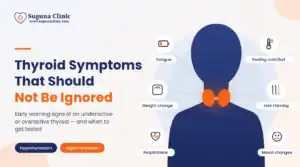
Hypothyroidism typically develops slowly and insidiously — patients often attribute symptoms to ageing, stress, or simply “being tired.” The classic symptom cluster includes:
- Persistent, unexplained fatigue — described as bone-deep exhaustion that does not improve with rest; feeling unrefreshed even after a full night’s sleep
- Unexplained weight gain — or difficulty losing weight despite eating sensibly and exercising. One of the most common presenting complaints among women in Gachibowli.
- Feeling cold all the time — cold intolerance even when others are comfortable; cold hands and feet
- Hair thinning or loss — diffuse hair thinning across the scalp (as opposed to patchy loss), often with rough, dry hair texture. Eyebrow hair loss — particularly from the outer third of the eyebrow — is a classic hypothyroid sign.
- Dry, rough skin — loss of the skin’s normal smoothness; thickened, scaly skin in severe cases
- Slow heart rate (bradycardia)
- Constipation — reduced gut motility from slowed metabolism. See: Constipation Treatment in Gachibowli.
- Depression, low mood, and brain fog — difficulty concentrating, poor memory, feeling mentally slow
- Heavy or irregular menstrual periods — menorrhagia (heavy bleeding) is a common presentation of hypothyroidism in Indian women
- Muscle weakness and joint aches — particularly in the hands, arms, and legs; some patients develop carpal tunnel syndrome
- Puffiness — particularly around the face, hands, and ankles (myxoedema in severe cases)
- Hoarse voice
- Raised cholesterol — hypothyroidism impairs cholesterol metabolism, raising LDL (“bad cholesterol”) levels. See: Cholesterol Treatment in Gachibowli.
Symptoms of Hyperthyroidism: The Opposite Picture
When the thyroid is overactive, the body operates in a state of sustained overdrive:
- Unintentional weight loss — despite eating normally or even more than usual
- Palpitations and rapid heart rate — awareness of a fast-beating or irregular heart; atrial fibrillation is a serious complication of untreated hyperthyroidism, particularly in older patients. See: Chest Pain Treatment in Gachibowli.
- Heat intolerance and excessive sweating — feeling hot when others are comfortable; profuse sweating without exertion
- Anxiety, irritability, and restlessness — nervousness, emotional volatility, difficulty sitting still
- Tremor — fine shaking of the hands and fingers
- Diarrhoea or frequent bowel movements
- Insomnia — difficulty falling or staying asleep despite exhaustion
- Hair thinning — fine, silky hair that breaks easily
- Muscle weakness — particularly of the upper arm and thigh muscles (proximal myopathy)
- Eye changes (Graves’ ophthalmopathy) — in Graves’ disease specifically, the eyes may appear prominent, red, or watery; double vision or difficulty closing the eyes can occur
- Goitre — visible neck swelling in Graves’ disease and toxic multinodular goitre
Understanding Your Thyroid Blood Test Results
The TSH (Thyroid Stimulating Hormone) test is the single most sensitive and reliable thyroid screening test. TSH is produced by the pituitary gland and acts as a thermostat signal: when thyroid hormone is low, the pituitary releases more TSH (like turning up the heat); when thyroid hormone is high, TSH is suppressed.
| TSH Level | T4 Level | Interpretation |
|---|---|---|
| 0.4–4.0 mIU/L | Normal | Normal thyroid function (euthyroid) |
| 4.0–10.0 mIU/L | Normal | Subclinical hypothyroidism — may or may not need treatment |
| Above 10 mIU/L | Low | Overt hypothyroidism — treatment needed |
| 0.1–0.4 mIU/L | Normal | Subclinical hyperthyroidism — monitor and assess |
| Below 0.1 mIU/L | High | Overt hyperthyroidism — treatment needed |
Reference ranges vary slightly between laboratories. Dr. Ram Kumar always interprets TSH results alongside T4, T3, and antibody levels, the patient’s symptoms, and their clinical context — not in isolation.
Thyroid Investigations
- TSH (Thyroid Stimulating Hormone) — the first-line screening test; highly sensitive to even early thyroid dysfunction
- Free T4 (FT4) — the active form of thyroxine; measured when TSH is abnormal
- Free T3 (FT3) — useful in suspected hyperthyroidism; sometimes elevated while T4 is still normal (T3 toxicosis)
- Anti-TPO antibodies (Anti-Thyroid Peroxidase) — elevated in Hashimoto’s thyroiditis; helps confirm autoimmune cause of hypothyroidism
- Anti-TSH receptor antibodies (TRAb) — elevated in Graves’ disease; confirms the autoimmune cause of hyperthyroidism
- Thyroid ultrasound — assesses the size, texture, and vascularity of the thyroid gland; characterises nodules as benign or suspicious based on their ultrasound features (echogenicity, margins, calcification, vascularity)
- Fine Needle Aspiration Cytology (FNAC) — for nodules with suspicious ultrasound features; a thin needle samples cells from the nodule for microscopic analysis to rule out malignancy. Dr. Ram Kumar arranges FNAC referrals when indicated.
- Thyroid radionuclide scan (nuclear scan) — differentiates between types of hyperthyroidism (Graves’ disease vs toxic nodule vs thyroiditis); used selectively
Thyroid Treatment
Treating Hypothyroidism: Levothyroxine (Thyroxine) Replacement
Hypothyroidism is treated with levothyroxine (LT4) — a synthetic form of the thyroxine hormone — which simply replaces what the thyroid is failing to produce. Brand names in India include Thyronorm, Eltroxin, and Thyrox. Levothyroxine is safe, effective, and taken once daily.
Key Principles of Levothyroxine Therapy — Critical Points Many Patients Get Wrong
- Take it on an empty stomach, ideally 30–60 minutes before breakfast or at least 4 hours after the last meal. Food — especially dairy products — significantly reduces absorption.
- Do not take it with calcium supplements, iron tablets, antacids, or milk — these bind to levothyroxine and prevent absorption. Space them at least 4 hours apart.
- Do not take it with chai — a very common mistake in Gachibowli households. The tannins and milk in tea reduce levothyroxine absorption significantly. Water only when taking thyroid medication.
- Never skip doses — levothyroxine has a long half-life and provides stable, consistent hormone levels only when taken every day.
- Starting dose is typically 25–50 mcg daily, increased gradually every 4–6 weeks based on TSH measurements. The correct dose is one that brings TSH into the target range (usually 0.5–2.5 mIU/L for most adults) while eliminating symptoms.
- TSH target during pregnancy is tighter — below 2.5 mIU/L in the first trimester, below 3.0 mIU/L in the second and third trimester. Levothyroxine dose often needs to be increased by 25–30% as soon as pregnancy is confirmed.
- Levothyroxine is a lifelong medication for most patients with Hashimoto’s or other causes of permanent hypothyroidism. Stopping it allows hypothyroidism to return.
TSH Monitoring Schedule
- Starting phase: TSH checked every 6–8 weeks until the target level is reached and stable
- Maintenance phase: TSH checked every 6 months once stable, then annually
- During pregnancy: TSH checked every 4 weeks throughout pregnancy
- After dose change: TSH checked 6–8 weeks after any adjustment
Treating Hyperthyroidism
Anti-Thyroid Medications
The first-line treatment for Graves’ disease and toxic goitre in India is carbimazole (or its active metabolite methimazole), which blocks the thyroid’s ability to produce new hormone. Treatment typically continues for 12–18 months, after which approximately 30–40% of Graves’ patients achieve remission. Propylthiouracil (PTU) is an alternative — particularly preferred in the first trimester of pregnancy and in thyroid storm. Beta-blockers (propranolol, atenolol) are prescribed alongside anti-thyroid drugs in symptomatic patients to control palpitations, tremor, and anxiety while waiting for thyroid hormone levels to fall.
Radioactive Iodine (RAI) Therapy
RAI — a capsule or liquid of radioactive iodine (I-131) taken orally — is a highly effective, safe, and definitive treatment for hyperthyroidism. The thyroid gland specifically absorbs iodine; the radioactive iodine destroys overactive thyroid tissue, permanently reducing hormone production. RAI is the preferred long-term treatment for Graves’ disease in many patients. It cannot be used during pregnancy. Most patients develop hypothyroidism after RAI and subsequently require lifelong levothyroxine. Dr. Ram Kumar arranges RAI therapy referrals through specialist nuclear medicine departments in Hyderabad.
Surgery (Thyroidectomy)
Surgical removal of part or all of the thyroid gland (thyroidectomy) is recommended for patients with large goitre causing compression symptoms, those who cannot tolerate medications, patients with thyroid cancer, and some who prefer surgical cure over long-term medication. Dr. Ram Kumar manages surgical referrals and post-surgical thyroid hormone replacement monitoring.
Treating Thyroid Nodules
Management depends on the nodule’s size, ultrasound characteristics, and FNAC result:
- Benign nodules below 1 cm: periodic ultrasound monitoring every 12–24 months; no immediate intervention required
- Benign nodules above 1 cm with low-suspicion features: FNAC to confirm benign nature, then regular monitoring
- Intermediate or suspicious features on ultrasound: FNAC for cytological assessment
- Malignant or indeterminate FNAC results: surgical referral for thyroid lobectomy or total thyroidectomy, depending on the cytological category
- Toxic (hormone-producing) nodules: radioactive iodine or surgery to eliminate the autonomous hormone production
Thyroid Disease, PCOS, and Metabolic Syndrome in Indian Women
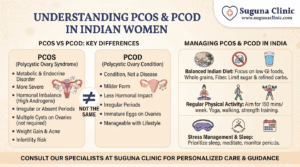
Thyroid disease — particularly Hashimoto’s hypothyroidism — is significantly more prevalent in women with polycystic ovary syndrome (PCOS). Both conditions affect young Indian women and share features including irregular periods, weight gain, hair thinning, and difficulty conceiving. It is essential to screen for thyroid dysfunction in every woman presenting with these features, as treating hypothyroidism can dramatically improve PCOS symptoms and fertility outcomes. Dr. Ram Kumar routinely includes thyroid testing in his assessment of women with PCOS, insulin resistance and prediabetes, and abnormal cholesterol levels — all of which are closely interconnected.
Diet and Lifestyle Tips for Thyroid Patients in Hyderabad
Iodine Intake
Iodine is essential for thyroid hormone synthesis. Use iodised salt consistently in cooking — most salt sold in India is now iodised, but this should be confirmed on the packaging. Avoid excessive raw cruciferous vegetables (cabbage, cauliflower, broccoli, radish) and soy products if you have hypothyroidism, as these contain goitrogens — compounds that mildly interfere with thyroid hormone production when consumed in very large quantities. Cooking these vegetables significantly reduces their goitrogenic effect, so moderation rather than elimination is the appropriate approach.
Selenium-Rich Foods
Selenium is a trace mineral essential for converting inactive T4 to active T3 in the body’s tissues. Selenium deficiency worsens autoimmune thyroid disease. Good sources in the Indian diet include: eggs, sunflower seeds (sunflower chikki), seafood, mushrooms, and whole grains such as brown rice and whole wheat.
Foods That Interfere With Levothyroxine Absorption
For patients on levothyroxine, these foods and substances must be timed carefully — taken at least 4 hours after the medication:
- Calcium-rich foods: milk, paneer, curd (dahi)
- Iron-rich foods and iron supplements
- Calcium supplements and antacids
- Soy products: tofu, soy milk
- High-fibre foods (when taken within 1–2 hours of medication)
The golden rule: take levothyroxine first thing in the morning with plain water, wait 30–60 minutes, then have breakfast and chai. Do not take it with chai.
Frequently Asked Questions — Thyroid Treatment in Gachibowli, Hyderabad
What is the normal TSH level in India?
Most Indian laboratories report a normal TSH range of 0.4–4.0 mIU/L (some use 0.5–5.0 mIU/L). However, Dr. Ram Kumar uses clinical context — symptoms, antibody status, age, and pregnancy status — alongside the TSH number when making treatment decisions. A TSH of 3.8 mIU/L in a symptomatic young woman with positive anti-TPO antibodies warrants a different approach than the same number in an asymptomatic elderly man.
Can hypothyroidism cause hair loss?
Yes — hair thinning and hair loss are among the most distressing symptoms of hypothyroidism, and one of the most common reasons women in Gachibowli seek help. Thyroid hormones are essential for the normal hair growth cycle; when levels fall, hair follicles enter the resting (telogen) phase prematurely and shed. The good news is that with correct levothyroxine therapy and stable TSH levels, hair growth typically recovers over 3–6 months. It takes time — patients should not expect immediate results.
Can thyroid problems cause weight gain?
Yes — hypothyroidism slows the metabolic rate, reducing calorie burning and leading to weight gain even without increased food intake. However, it is important to understand that the weight gain directly attributable to thyroid hormone deficiency is typically modest (2–5 kg) — mostly from fluid retention. Treating hypothyroidism corrects the metabolic slowdown, but does not automatically cause dramatic weight loss. Diet and exercise remain important alongside levothyroxine therapy.
Do I need to take thyroid medication for life?
It depends on the cause. Hypothyroidism caused by Hashimoto’s thyroiditis, radioiodine treatment, or thyroid surgery is generally permanent — lifelong levothyroxine is needed. Some patients with subclinical hypothyroidism or transient thyroiditis (e.g. post-partum thyroiditis) may recover normal thyroid function. For hyperthyroidism caused by Graves’ disease, a proportion of patients achieve remission after 12–18 months of anti-thyroid medication — but many relapse and eventually need definitive treatment (RAI or surgery). Dr. Ram Kumar assesses each patient’s specific situation and prognosis individually.
Is it safe to take thyroid medication during pregnancy?
Yes — levothyroxine is completely safe during pregnancy and is essential for the health of both mother and baby. Uncontrolled hypothyroidism during pregnancy carries far greater risks (miscarriage, developmental problems) than adequately treated hypothyroidism. The dose often needs adjustment in early pregnancy — this is why Dr. Ram Kumar recommends checking TSH as soon as pregnancy is confirmed and adjusting the levothyroxine dose immediately if the TSH is above 2.5 mIU/L.
Why do I still feel tired even though my TSH is “normal”?
This is one of the most common questions Dr. Ram Kumar receives from thyroid patients. Several explanations are possible: (1) Your TSH may be “normal” by the lab’s range but not optimal for you — some patients feel best with TSH between 1.0–2.5, not at the upper limit of normal. (2) Iron deficiency, Vitamin B12 deficiency, anaemia, or Vitamin D deficiency — all of which commonly co-exist with Hashimoto’s thyroiditis — could be causing the fatigue independently. (3) A small proportion of patients do better with T4+T3 combination therapy than with levothyroxine alone. Dr. Ram Kumar investigates all these possibilities and does not accept unexplained fatigue in a thyroid patient without a thorough review.
Can I eat cabbage and cauliflower if I have hypothyroidism?
Yes — in normal, cooked portions. The concern about goitrogens (compounds in cruciferous vegetables that mildly interfere with iodine uptake) is often exaggerated. You would need to eat very large quantities of raw cruciferous vegetables daily to meaningfully affect thyroid function. Cooking destroys the majority of goitrogenic compounds. Patients on adequate iodine intake and levothyroxine therapy should feel free to eat cauliflower, cabbage, and other cruciferous vegetables as part of a normal, healthy balanced diet.
Related Health Guides
This article is for general health information only and is not a substitute for personal medical advice. In an emergency, call 112 or go to the nearest hospital.



Trackbacks/Pingbacks