Are you looking for reliable information on diabetes care in Gachibowli, Hyderabad? This guide from Dr. Ram Kumar explains how diabetes is diagnosed and managed for people across Gachibowli, Nanakramguda, Financial District, Kondapur, and the wider western Hyderabad area. Good diabetes care goes beyond prescribing medication — it helps you understand your condition, control your blood sugar, and prevent life-threatening complications before they begin.
Diabetes is one of India’s most urgent health challenges. According to the Indian Council of Medical Research (ICMR), over 101 million Indians are currently living with diabetes, and Telangana has one of the highest prevalence rates in the country. Left untreated, diabetes causes irreversible damage to the kidneys, eyes, nerves, and heart. The good news: with correct diagnosis, the right treatment, and sustainable lifestyle changes, diabetes is entirely manageable — and that is exactly what this guide explains.
What Is Diabetes? Understanding the Condition That Affects Millions of Indians
Diabetes mellitus is a chronic metabolic disorder in which the body is unable to regulate blood glucose (sugar) levels properly. This happens either when the pancreas does not produce enough insulin — the hormone responsible for moving glucose from the bloodstream into cells — or when the body’s cells do not respond to insulin effectively, a condition called insulin resistance.
When glucose cannot enter the cells, it accumulates in the bloodstream, causing high blood sugar (hyperglycaemia). Over time, sustained hyperglycaemia damages blood vessels and nerves throughout the body — affecting the heart, kidneys, eyes, feet, and brain. The damage is silent and gradual, which is why many people in Gachibowli do not know they have diabetes until serious complications have already begun.
Why is diabetes so common in Hyderabad and Telangana? Several factors make urban South Indians particularly vulnerable: a genetic predisposition to insulin resistance at lower body weights than Western populations, a traditional diet heavy in white rice and refined carbohydrates, increasingly sedentary desk-based lifestyles, high psychological stress, and limited awareness of prediabetes as a reversible warning stage. Many people who are tested for the first time have blood sugar levels far higher than they expected — often because they had no obvious symptoms for months or years.
Types of Diabetes Diagnosed and Treated
Type 1 Diabetes
Type 1 diabetes is an autoimmune condition in which the immune system attacks and permanently destroys the insulin-producing beta cells of the pancreas. People with Type 1 diabetes produce little or no insulin and require lifelong insulin therapy. Though it most often appears in children and young adults, it can develop at any age. Type 1 patients in Gachibowli and Nanakramguda should work closely with their doctor to optimise their insulin regimens and monitor carefully for early complications.
Type 2 Diabetes
Type 2 diabetes is the most common form, accounting for over 90% of all diabetes diagnoses. It develops when the body becomes progressively resistant to insulin and the pancreas gradually loses its ability to compensate. Type 2 is strongly linked to lifestyle — excess weight, physical inactivity, poor diet, and chronic stress — but also carries a significant genetic component, particularly pronounced in South Asian populations. The encouraging truth is that Type 2 diabetes can often be reversed or placed into remission with the right intervention, especially when identified at an early stage.
Prediabetes
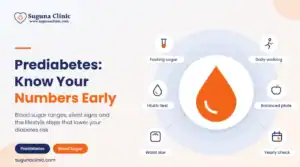
Prediabetes is a borderline condition where blood sugar levels are above normal but not yet high enough to be classified as Type 2 diabetes. Without any intervention, the majority of people with prediabetes develop full Type 2 diabetes within five years. However, with targeted lifestyle changes guided by Dr. Ram Kumar, prediabetes is entirely reversible. This is why Dr. Ram Kumar strongly encourages anyone in Gachibowli, Financial District, or nearby areas with risk factors — a family history, excess abdominal weight, or a sedentary lifestyle — to get tested, even if they feel perfectly well.
Gestational Diabetes
Gestational diabetes occurs during pregnancy when hormonal changes cause temporary insulin resistance. While it typically resolves after delivery, it significantly increases the mother’s lifetime risk of developing Type 2 diabetes. It can also cause complications for the baby if left unmanaged. Dr. Ram Kumar provides specialist assessment and careful management of gestational diabetes, coordinating with obstetric care as required.
Warning Signs and Symptoms of Diabetes — Do Not Ignore These
One of the most dangerous features of diabetes — especially Type 2 — is that it often produces no obvious symptoms during its early stages. By the time symptoms appear, blood sugar may have been elevated for months or even years. The following warning signs should prompt you to see a doctor immediately for a blood sugar test:
- Frequent urination — especially needing to wake at night (nocturia)
- Excessive thirst — drinking large quantities of water without feeling satisfied
- Unexplained weight loss — particularly in Type 1 diabetes, where the body breaks down fat and muscle for fuel
- Constant fatigue and weakness — cells are not receiving sufficient glucose for energy
- Blurred or deteriorating vision — high glucose causes the lens of the eye to swell
- Slow-healing wounds or recurring infections — hyperglycaemia impairs the immune system and blood circulation
- Tingling, numbness, or burning sensation in hands or feet — early peripheral neuropathy (nerve damage)
- Darkening of skin in armpits, neck, or groin folds (acanthosis nigricans) — a classic sign of insulin resistance
- Increased hunger even after eating — cells cannot absorb glucose, so the brain keeps signalling hunger
- Recurring skin, gum, or urinary tract infections — high blood sugar creates an ideal environment for bacteria and fungi
If you recognise any of these signs in yourself or a family member anywhere in Gachibowli, Nanakramguda, Kondapur, or Financial District — do not wait. Early diagnosis saves lives and prevents complications that are entirely avoidable with timely treatment.
How Diabetes Is Diagnosed
Accurate diagnosis is the foundation of effective diabetes treatment. Dr. Ram Kumar uses a combination of the following clinically validated blood tests to confirm diagnosis and assess control:
| Test | Normal | Prediabetes | Diabetes |
|---|---|---|---|
| Fasting Blood Sugar (FBS) | Below 100 mg/dL | 100–125 mg/dL | 126 mg/dL or above |
| Post-Prandial Blood Sugar (PPBS) | Below 140 mg/dL | 140–199 mg/dL | 200 mg/dL or above |
| Random Blood Sugar (RBS) | Below 140 mg/dL | — | 200+ mg/dL (with symptoms) |
| HbA1c (Glycated Haemoglobin) | Below 5.7% | 5.7%–6.4% | 6.5% or above |
The HbA1c test is particularly valuable because it reflects your average blood sugar level over the past 2–3 months — a far more complete picture than any single fasting reading. No fasting is required, making it one of the most convenient diabetes tests available. Learn more: What Is HbA1c? Normal Range, Target Levels, and What to Do If Yours Is High.
What Good Diabetes Care Includes
Good diabetes care takes a personalised, whole-person approach. An individualised care plan is built around a person’s specific blood sugar pattern, co-existing conditions, lifestyle, and personal goals. Comprehensive diabetes care includes:
- ✔ Full diabetes diagnosis workup — FBS, PPBS, HbA1c, and additional metabolic panel
- ✔ Personalised blood sugar targets — safe, achievable goals based on your age, health status, and risk profile
- ✔ Oral medication prescriptions — metformin, sulphonylureas, DPP-4 inhibitors, SGLT-2 inhibitors, and combinations tailored to your pattern
- ✔ Insulin management — initiation, dose titration, injection technique training, and ongoing monitoring for patients requiring insulin
- ✔ Nutritional counselling — practical diabetes diet planning using familiar Hyderabadi and Telugu foods, designed for real-life adherence
- ✔ Blood sugar monitoring guidance — selecting and using glucometers, understanding your readings, and tracking your data effectively
- ✔ Gestational diabetes management — specialised assessment, monitoring, and dietary guidance during pregnancy
- ✔ Cardiac evaluation for diabetic patients — ECG, blood pressure monitoring, and cholesterol management for patients at cardiovascular risk
- ✔ Complication screening — regular kidney function tests (creatinine, urine microalbumin), liver function, thyroid function, and foot examinations, including nerve function testing
- ✔ Diabetes education — teaching patients to understand their condition, recognise and manage hypoglycaemia (low blood sugar), and follow sick-day rules
- ✔ Ongoing follow-up care — regular reviews every 3 months to adjust treatment as needed and track long-term progress
What Happens If Diabetes Is Left Untreated? Understanding Complications
Many patients in Gachibowli seek help only after complications have already developed. This is entirely avoidable. When blood sugar remains elevated for months or years, it silently causes:
- Diabetic retinopathy — damage to the blood vessels in the retina, which can progress to vision loss or blindness. India has the world’s second-largest burden of diabetic retinopathy.
- Diabetic nephropathy (kidney disease) — sustained high blood sugar damages the kidney’s delicate filtering units. Diabetes is the leading cause of chronic kidney disease and dialysis-dependence in India.
- Diabetic neuropathy — nerve damage causing pain, burning, tingling, or loss of sensation in the feet and hands. Severe neuropathy leads to foot ulcers and, in neglected cases, limb amputations.
- Cardiovascular disease — people with diabetes are 2–4 times more likely to suffer heart attacks and strokes. Diabetes accelerates the narrowing and hardening of arteries.
- Diabetic foot problems — poor circulation and nerve damage combine to make even minor cuts or blisters potentially dangerous. Dr. Ram Kumar performs regular structured foot examinations as part of every diabetes review.
- Increased susceptibility to infections — high blood sugar suppresses immune function, making patients more vulnerable to bacterial and fungal infections, including those of the skin, lungs, and urinary tract.
Every one of these complications is preventable with consistent diabetes control. People who attend regular reviews, follow their treatment plan, and make the recommended lifestyle adjustments avoid these outcomes and live full, active, productive lives.
Managing Diabetes Through Diet and Lifestyle: Practical Tips for Hyderabad Patients
Medication alone cannot fully control diabetes. Lifestyle changes are equally important — sometimes more so. Realistic, culturally appropriate guidance works best for people in Gachibowli and across Hyderabad. See our full guide: Managing Diabetes Through Diet: A Practical Guide.
Diabetes-Friendly Diet for Hyderabad Patients
- Replace white rice with small portions of brown rice, broken wheat (daliya), or foxtail millet (korralu) — all widely available in Hyderabad markets and proven to have a lower glycaemic impact
- Increase non-starchy vegetables: ridge gourd (beerakaya), cluster beans (goru chikkudukaya), drumstick (munagakaya), spinach, tomatoes, and all leafy greens
- Choose whole lentils and legumes — chana, rajma, and masoor dal — as high-fibre, protein-rich foods that slow glucose absorption
- Strictly limit maida (refined flour) products: white bread, biscuits, parotta, puri, and popular fried snacks like mirchi bajji
- Be mindful of fruit portions: mangoes, bananas, grapes, and chikku raise blood sugar quickly. Lower-sugar choices include guava, papaya, jamun, and amla (gooseberry)
- Avoid sugary drinks: full-sugar chai, cold drinks (soft drinks), packaged fruit juices, and sweetened lassi
Read our detailed local guide: Diabetes Diet Plan for Hyderabad: Local Food Guide and Diabetes Diet for Indians: Complete Blood Sugar Guide.
Exercise for Blood Sugar Control
Regular physical activity is one of the most powerful tools available for blood sugar management. Dr. Ram Kumar recommends at least 30 minutes of moderate exercise on most days — brisk walking, cycling, swimming, or yoga. Research consistently shows that even a 15-minute walk after meals significantly reduces post-meal blood sugar spikes. For patients in Gachibowli and Nanakramguda, a consistent morning walk through local parks is one of the simplest and most effective steps you can take.
Medication Adherence — Never Skip Your Treatment
One of the most common mistakes diabetes patients make is skipping medication on days they feel well. Blood sugar rises silently even when there are no symptoms. Dr. Ram Kumar works carefully with each patient to select medications that fit their schedule, minimise side effects, and make long-term adherence genuinely sustainable.
Dr. Ram Kumar: Hyderabad’s Trusted Diabetes Specialist
Choosing the right doctor is one of the most important decisions a person with diabetes can make. In Gachibowli and across western Hyderabad, patients consistently choose Dr. Ram Kumar for his exceptional combination of clinical expertise, genuine compassion, and practical, straightforward guidance. Here is what sets Dr. Ram Kumar apart as a leading diabetes doctor in this region:
Deep Clinical Expertise: Dr. Ram Kumar has extensive training and hands-on experience managing the full spectrum of diabetes presentations — from patients newly diagnosed with prediabetes to complex cases involving advanced complications and multiple co-existing conditions. He stays current with the latest evidence-based guidelines from the American Diabetes Association (ADA) and the Research Society for the Study of Diabetes in India (RSSDI), always applying them with sensitivity to the Indian patient context.
A Holistic Approach, Not Just Prescriptions: Dr. Kumar firmly believes that a prescription pad alone is not the answer to diabetes. Every consultation explores the patient’s dietary habits, activity levels, stress, sleep quality, and family dynamics — factors that profoundly influence blood sugar control. His patients receive practical education alongside medication, empowering them to make lasting changes in their daily life.
Clear, Accessible Communication: Dr. Ram Kumar has a genuine ability to explain complex medical concepts in plain, understandable language — in English, Telugu, or Hindi, according to each patient’s preference. Patients consistently report leaving consultations with a clear understanding of why they are taking each medication, what their blood sugar numbers actually mean, and what specific changes they need to make in their daily routine.
Coordinated, Multidisciplinary Care: Diabetes rarely travels alone — it frequently co-exists with hypertension, high cholesterol, thyroid disorders, and other conditions. Dr. Ram Kumar manages these conditions together in a coordinated way, reducing the burden of multiple specialist visits. Where specialist referral is needed — to an ophthalmologist, nephrologist, cardiologist, or dietitian — he facilitates these connections and stays actively involved in the patient’s overall care.
Experience Across Many Patients: Over the years, Dr. Ram Kumar has cared for many people with diabetes and related conditions, and he shares what he has learned through this website for readers across Gachibowli, Nanakramguda, Financial District, Kondapur, and beyond. Read more about Dr. Ram Kumar’s approach to diabetes care.
Frequently Asked Questions About Diabetes Treatment in Gachibowli, Hyderabad
What does good diabetes care include?
Good diabetes care combines accurate diagnosis (HbA1c and blood sugar tests), a personalised medication plan, diet and lifestyle counselling, insulin management where needed, and regular screening for complications of the kidneys, eyes, nerves, and heart. Readers in Gachibowli, Nanakramguda, Financial District, and Kondapur can use this guide to understand what to ask their own doctor.
Can Type 2 diabetes be cured?
Type 2 diabetes cannot be “cured” in the traditional sense, but it can be put into remission — meaning blood sugar levels return to the normal range without medication. This is achievable for many patients through significant weight loss, consistent exercise, and a sustained change in eating habits. Dr. Ram Kumar explores all options with eligible patients, including structured lifestyle-first approaches where appropriate.
What is the recommended HbA1c target for diabetic patients in India?
For most adults with diabetes, the recommended HbA1c target is below 7.0%. However, targets are individualised — younger, healthier patients may aim for below 6.5%, while older patients or those with complex conditions may have a personalised target of below 8% to safely avoid hypoglycaemia. Dr. Ram Kumar sets personalised, realistic targets at each patient’s first consultation.
Do I need to fast before a diabetes blood test?
It depends on the test. A Fasting Blood Sugar (FBS) requires a minimum 8-hour fast. A Post-Prandial Blood Sugar (PPBS) is taken exactly 2 hours after a meal. A Random Blood Sugar (RBS) can be taken at any time of day. An HbA1c test requires no fasting whatsoever — making it one of the most convenient tests for monitoring long-term diabetes control.
What Indian foods help control blood sugar naturally?
Some of the best blood-sugar-friendly foods available in Hyderabad include: bitter gourd (karela), fenugreek seeds (methi), barley (jau), jowar, bajra, moong dal, rajma, all leafy greens, ridge gourd, and low-sugar fruits such as guava, jamun, and amla. White rice, maida products, fried snacks, sugar-sweetened chai, and packaged sweets are the main foods to limit. See our full guide: Diabetes Diet for Indians: A Complete Blood Sugar Guide.
What are the early warning signs of diabetes?
The most common early signs include frequent urination (especially at night), excessive thirst, unexplained fatigue, blurred vision, slow-healing cuts or wounds, recurring infections, and tingling or numbness in the feet or hands. Many people with Type 2 diabetes have no symptoms at all in the early stages — which is exactly why routine blood sugar screening is recommended for everyone over 35 or with any risk factors.
How often should a person with diabetes have a check-up?
Most patients have a detailed diabetes review every 3 months, which includes an HbA1c test, blood pressure check, medication review, and symptom discussion. Annual tests include kidney function (creatinine and urine microalbumin), liver function, fasting lipid panel, thyroid function, and a structured foot examination. Patients with poorly controlled diabetes or existing complications may require more frequent visits.
What is the difference between blood sugar 200 after eating and fasting blood sugar?
Fasting blood sugar measures glucose after a period of no food (typically overnight). A reading of 126 mg/dL or above on two occasions confirms diabetes. Post-meal blood sugar — measured 2 hours after eating — should normally be below 140 mg/dL. A reading of 200 mg/dL or above after eating indicates diabetes. See our dedicated article: Blood Sugar 200 After Eating: What It Means and What to Do.
Can a diabetic patient eat biryani?
Yes — with sensible portion control and the right accompaniments. White rice biryani is high on the glycaemic index and causes a rapid rise in blood sugar when eaten in large quantities. The key strategies are keeping the rice portion small (a cup or less), eating it with raita and salad to slow absorption, choosing vegetable or lean meat biryani over heavily fatty versions, and walking after the meal. Read the full answer from Dr. Ram Kumar: Can Diabetics Eat Biryani? A Hyderabad Doctor’s Honest Answer.
Related Health Guides
This article is for general health information only and is not a substitute for personal medical advice. In an emergency, call 112 or go to the nearest hospital.
Related Articles on Diabetes You May Find Helpful
- Managing Diabetes Through Diet: A Practical Guide
- Diabetes Diet Plan for Hyderabad: Local Food Guide
- Diabetes Diet for Indians: Complete Blood Sugar Guide
- What Is HbA1c? Normal Range, Target Levels & What to Do If Yours Is High
- Blood Sugar 200 After Eating: What It Means and What to Do
- Can Diabetics Eat Biryani? A Hyderabad Doctor’s Honest Answer



Trackbacks/Pingbacks