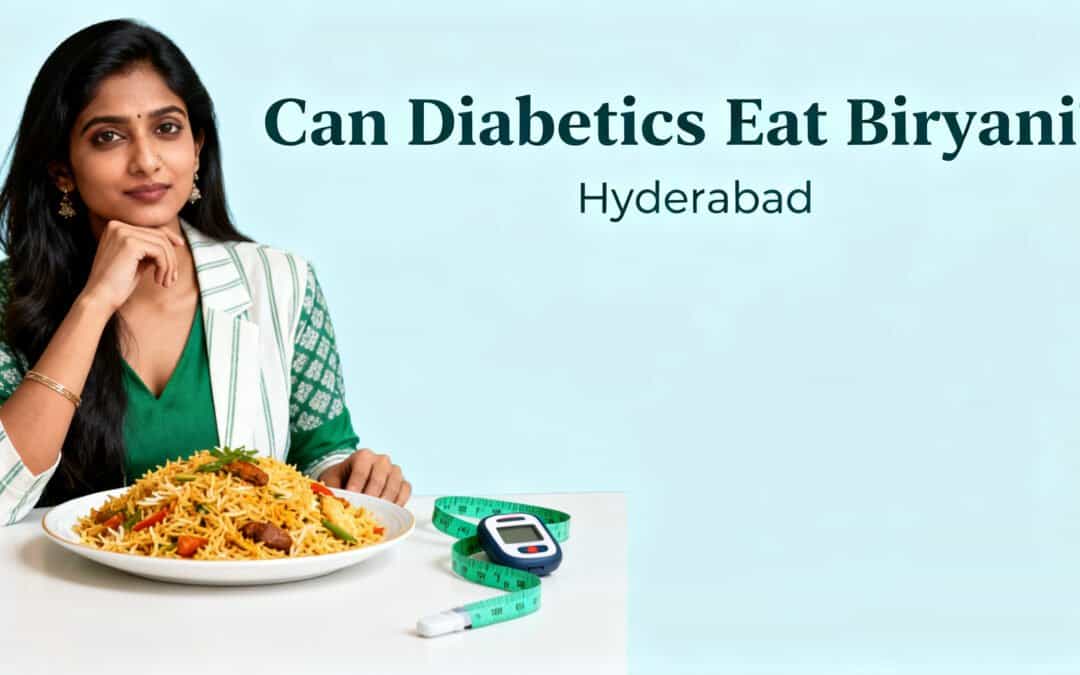
Yes — diabetics can eat biryani. But portion size, food pairing, and timing make the difference between a manageable meal and a blood sugar spike. This guide from Dr. Ram Kumar at Boston Diabetes, Gachibowli gives you an honest, practical answer based on how biryani actually affects blood sugar — with specific tips that work for Hyderabad’s food culture.
Biryani is not a “forbidden food” for diabetics. Total avoidance is neither necessary nor realistic if you live in Hyderabad. What matters is how much you eat, what you eat it with, and when you check your numbers afterwards.
The Short Answer: Yes, But Follow These Rules
- Keep your portion to about 100g of cooked biryani rice (roughly half a cup / one small plate)
- Eat in this order: raita or salad first → meat/protein pieces → rice last; eating carbohydrates last reduces the glucose peak significantly
- Pair with raita (plain curd) — protein and fat slow glucose absorption
- Add a fresh cucumber-onion salad — fibre slows carb absorption
- Avoid sugary drinks alongside — no Mirinda, Pepsi, or sweet lassi
- Walk for 15 minutes after the meal — exercise reduces post-meal glucose by 10–30%
- Check your blood sugar 2 hours after eating to learn your personal response
- Do not eat biryani on an empty stomach — have a small protein snack (a handful of groundnuts or roasted chana) beforehand if very hungry
Why Biryani Raises Blood Sugar — And Why It’s Not the Worst Option
Biryani is a high-carbohydrate meal because of the rice. But not all rice is equally fast at raising blood sugar. The key measure is the Glycaemic Index (GI) — a score from 1–100 that tells you how quickly a food raises blood glucose.
| Rice / Food | GI | Blood Sugar Impact |
|---|---|---|
| Brown rice | ~50 | Lower spike — best option |
| Aged Basmati (used in Hyderabadi dum biryani) | ~56 | Medium — manageable in small portions |
| Regular Basmati | ~58 | Medium |
| Sona Masoori | ~60–65 | Moderate spike |
| Regular white rice | ~72 | Higher spike |
| White bread / naan | ~75 | Fastest spike — worse than rice |
Hyderabadi dum biryani uses aged long-grain basmati — which has a lower GI than the regular basmati used in everyday cooking. That gives it a modest advantage over a plain plate of white rice, even before factoring in the protein from meat and the fat from ghee, both of which further slow glucose absorption. The spices in biryani — particularly cinnamon, cardamom, and cloves — have modest insulin-sensitising properties. None of this makes biryani a health food, but it means biryani is not the worst carbohydrate choice in Hyderabad’s culinary landscape.
White bread, maida roti, puri, and naan have higher GIs than biryani made with aged basmati. Many common items are more dangerous for blood sugar than a small plate of biryani.
How Much Biryani Can a Diabetic Eat?
This is where most patients go wrong — not by eating biryani at all, but by eating a full restaurant portion in one sitting.
| Portion | Approximate Carbs | Suitable for Diabetics? |
|---|---|---|
| 100g cooked rice (½ cup / one small plate) | ~25–30g | ✅ Yes — manageable with raita and salad |
| 200g cooked rice (one full plate) | ~50–60g | ⚠️ Too much at once — split into 2 meals |
| Restaurant “full plate” (350–400g) | ~90–100g | ❌ Very high — will spike blood sugar significantly |
When eating at a Hyderabad restaurant, ask for a half portion, or share one full plate between two people and order extra raita and salad to compensate. Most Hyderabad biryani restaurants provide extra raita at no charge if asked — it is worth asking.
The Eating Order Principle — Often More Important Than Portion Size
Clinical research has demonstrated that the order in which you eat food within a meal significantly affects post-meal blood sugar. Eating carbohydrates last — after protein and vegetables — reduces the blood sugar peak by 30–40% compared to eating carbohydrates first.
Applied to biryani: at a restaurant or at home, start with the raita and salad, eat the meat or paneer pieces from the biryani next, then eat the rice. Most people instinctively eat the rice first and the side dishes last — exactly the wrong order for blood sugar management.
What to Eat With Biryani to Control Blood Sugar Spike
Best additions for diabetics
- Plain curd / raita — the single most important addition; protein and fat in curd slow carbohydrate absorption; boondi raita or cucumber raita both work
- Fresh salad — cucumber, tomato, and onion salad adds fibre and bulk without carbohydrates
- Dal or lentil side — a small katori of dal at home adds protein and soluble fibre that moderates the rice glucose response
- The protein in the biryani itself — for meat biryani, eat chicken or mutton pieces first; for paneer biryani, eat the paneer pieces first
What to avoid alongside biryani
- Soft drinks (Pepsi, Mirinda, Thums Up) — adds 35–40g of pure sugar; a critical mistake
- Sweet lassi — another 25–30g of sugar; opt for plain salted lassi or buttermilk instead
- Naan, parotta, or extra roti — additional carbohydrates on top of the rice
- Refills — decide your portion before you start eating and do not take more
Vegetarian Biryani for Diabetics
Most diabetes biryani guidance assumes non-vegetarian biryani, but a significant portion of Boston Diabetes’s patients are vegetarian. Key considerations for veg biryani:
- Paneer biryani — the best vegetarian biryani option for diabetics; paneer (Indian cottage cheese) is very high protein (18g/100g) and has a GI of approximately 25; eating the paneer pieces first before the rice is especially effective
- Vegetable biryani (no paneer) — the least protein of the biryani variants; add a separate dal or raita alongside; the fibre from vegetables helps but the protein content is lower than paneer or meat biryani
- Egg biryani — very good option; eggs provide complete protein at zero GI; eat the eggs first
- Soya chunks biryani — soya chunks (meal maker) have approximately 52% protein content by dry weight; an excellent substitute for meat in biryani; soya has low GI and the protein content makes it one of the best vegetarian biryani proteins for blood sugar management
Is Hyderabadi Dum Biryani Better or Worse Than Other Biryanis?
Compared to other popular biryani varieties, Hyderabadi dum biryani has several features that make it comparable or slightly better for blood sugar management in appropriate portions:
- Aged basmati rice — lower GI than parboiled or short-grain rice used in some other regional variants
- High protein-to-rice ratio — generous meat or paneer portions add protein that slows glucose absorption
- Whole spices — cinnamon, cardamom, cloves, and bay leaf add modest metabolic benefit
The main downside of restaurant dum biryani is the significant ghee and oil content, which adds calories. Home-cooked biryani allows control over oil quantity, rice-to-protein ratio, and portion size — and is almost always the better choice for diabetics.
Rice vs Roti — Which Is Actually Better for Diabetics?
This is one of the most frequent questions Dr. Ram Kumar hears at Boston Diabetes. The honest answer: it depends on type and portion, not the food itself.
| 1 Medium Whole Wheat Roti (30g) | ½ Cup Cooked Basmati Rice (100g) | |
|---|---|---|
| Carbohydrates | ~15g | ~25–28g |
| Fibre | ~2g (whole wheat) / ~0.5g (maida) | ~0.5g (white) / ~2g (brown) |
| GI | ~62 (whole wheat) / ~70+ (maida) | ~56–58 (basmati) |
Whole wheat roti has modestly more fibre and a slightly lower GI per gram of carbohydrate than white basmati rice. But the total carbohydrate consumed depends entirely on portion — 3 maida rotis will spike blood sugar as significantly as one small plate of basmati rice with raita. Choose whole wheat over maida; choose basmati or brown rice over regular white rice; but do not assume roti is automatically safe in large portions.
Blood Sugar Targets After Eating Biryani
- Less than 140 mg/dL two hours after eating — ideal target for diabetics
- 140–180 mg/dL — acceptable but worth reviewing portion size or pairing strategy
- Above 180 mg/dL — too high; reduce biryani portion, add more protein and fibre, or discuss medication adjustment with Dr. Ram Kumar
- Above 200 mg/dL consistently — indicates your overall diabetes management needs review; see Blood Sugar 200 After Eating: What It Means and What to Do
A glucometer check before and exactly 2 hours after eating biryani gives you personal data about how your body responds — which is more useful than any general guideline.
Smarter Ways to Enjoy Biryani with Diabetes
At home
- Use a 50/50 mix of brown rice and aged basmati for lower GI without sacrificing all the taste
- Increase the protein-to-rice ratio — more chicken, paneer, or soya chunks; less rice
- Add vegetables (carrots, peas, beans) to add fibre to the dish itself
- Use less oil and ghee than the recipe calls for
- Serve with a generous portion of plain curd and a fresh salad
At a restaurant
- Order a half portion, or share one full plate with another person
- Ask for extra raita — most restaurants provide it without charge
- Follow the eating order: raita → meat/paneer → rice
- Drink plain water, jeera water, or buttermilk — not soft drinks or sweet lassi
- Take a 15-minute walk after the meal; this is the single most effective post-biryani blood sugar reducer
- Eat biryani at lunch rather than dinner — insulin sensitivity is higher during the day
Foods in Hyderabad That Actually Spike Blood Sugar More Than Biryani
Biryani receives disproportionate blame. Several everyday Hyderabadi foods are more problematic for blood sugar than a small portion of dum biryani with raita:
- Soft drinks — 35–45g of pure sugar per can; zero nutritional value; more immediately damaging than a serving of biryani
- Sweetened chai — 3 cups daily with 2 teaspoons of sugar each = 36g of pure sugar before any meal is counted
- Osmania biscuits and maida biscuits — several small biscuits add up to significant refined carbohydrate very quickly
- Mirchi bajji — maida batter coating with deep frying; GI above 75
- Double ka meetha — fried white bread + sugar syrup; very high GI with no protein content
- Fruit juices (even fresh-squeezed) — removing fibre concentrates sugar; a glass of orange juice raises blood sugar faster than eating 2 whole oranges
Managing diabetes in Hyderabad is about making smarter choices across the whole day — not about singling out one culturally important dish. See the full guide: Diabetes Diet Plan for Hyderabad: Managing Blood Sugar with Local Food.
Frequently Asked Questions
Can diabetics eat biryani?
Yes, in a portion of approximately 100g of cooked rice, paired with raita and salad, eating protein before the rice, and taking a short walk after. Total avoidance is not medically necessary. Portion control and smart pairing are the key principles.
How much biryani can a diabetic eat?
About 100g of cooked biryani rice (half a cup / one small plate) per meal is a reasonable portion for most Type 2 diabetics. This provides roughly 25–30g of carbohydrates. Check your blood sugar 2 hours after eating to understand how your body responds — individual responses vary significantly based on medications, activity level, and metabolic status.
Does biryani spike blood sugar?
Yes, like all rice-based meals, biryani raises blood sugar. However, aged basmati rice has a lower GI than regular white rice, the protein from meat and fat from ghee slow glucose absorption, and the right food pairing and eating order further reduce the spike. The post-meal glucose rise from a half plate of biryani with raita is often lower than patients expect.
Is brown rice biryani better for diabetics?
Yes — brown rice has GI approximately 50 vs 56 for basmati, producing a smaller blood sugar spike. The taste difference is significant. A practical middle ground is a 50/50 blend of brown rice and aged basmati; the texture and taste are acceptable to most patients while the glycaemic index is meaningfully reduced.
What should a diabetic eat with biryani to reduce the blood sugar spike?
Follow the eating order: start with raita and salad, then eat protein (meat pieces or paneer), then the rice last. Pair with generous plain raita, a fresh cucumber-onion-tomato salad, and avoid soft drinks. Take a 15-minute walk after the meal. This combination typically keeps post-meal glucose within an acceptable range for moderate portions.
Is Hyderabadi dum biryani worse for diabetes than other types?
Not significantly. Aged basmati (used in dum biryani) has a slightly lower GI than regular basmati. The generous protein portions are a positive. The main concern at restaurants is the quantity of oil and ghee used, which adds calories. Portion size remains the primary variable regardless of the biryani type.
What is the glycaemic index of basmati rice?
Basmati rice has a GI of approximately 56–58, in the medium GI category — meaningfully lower than regular white rice (GI ~72) and white bread (GI ~75). Aged long-grain basmati, used in Hyderabadi dum biryani, may be slightly lower still due to starch retrogradation during storage.
Which rice is best for diabetics — basmati, sona masoori, or brown rice?
Best to least: brown rice (GI ~50), aged basmati (GI ~56), regular basmati (GI ~58), sona masoori (GI ~60–65), regular white rice (GI ~72). In practice, portion size matters more than the variety — a small portion of sona masoori is considerably better than a large serving of brown rice.
Can a diabetic eat biryani at a restaurant?
Yes, with a clear plan: order half a portion, ask for extra raita, follow the protein-before-rice eating order, drink water or buttermilk (not soft drinks), and walk for 15 minutes after. Knowing your portion limit before sitting down is much easier than exercising willpower mid-meal at a restaurant.
My blood sugar is 200 after eating biryani — is that normal?
A 2-hour post-meal reading of 200 mg/dL is above the ideal target of below 140 mg/dL. It is not an emergency from a single meal, but consistently reaching 200 after meals indicates your portion size, food pairing, activity level, or diabetes medication needs review. See your doctor — do not adjust medication doses on your own. See: Blood Sugar 200 After Eating: What It Means and What to Do.
Visit Boston Diabetes for Personalised Diabetes Dietary Guidance
The right approach to eating biryani with diabetes depends on your specific medications, current HbA1c, overall carbohydrate intake across the day, and your post-meal glucose responses. Dr. Ram Kumar at Boston Diabetes provides personalised dietary counselling as part of comprehensive diabetes management — practical, Hyderabad-specific advice calibrated to what patients actually eat.
📍 We’ve moved: Suguna Clinic has closed. Dr. Ram Kumar now practices at Boston Diabetes, Gachibowli.
📍 Boston Diabetes — 1st Floor, above Ratnadeep Supermarket, Lumbini Avenue, Gachibowli, Hyderabad, Telangana 500032
📞 Call / WhatsApp: +91 80086 72097 | Book online
Related Articles
- Diabetes Diet Plan for Hyderabad: Managing Blood Sugar with Local Food
- Diabetes Diet for Indians: Complete Blood Sugar Management Guide
- Managing Diabetes Through Diet: A Practical Guide for Indian Patients
- 10 Indian Desserts That Won’t Spike Your Blood Sugar
- Blood Sugar 200 After Eating: What It Means and What to Do
- Diabetes Treatment in Gachibowli