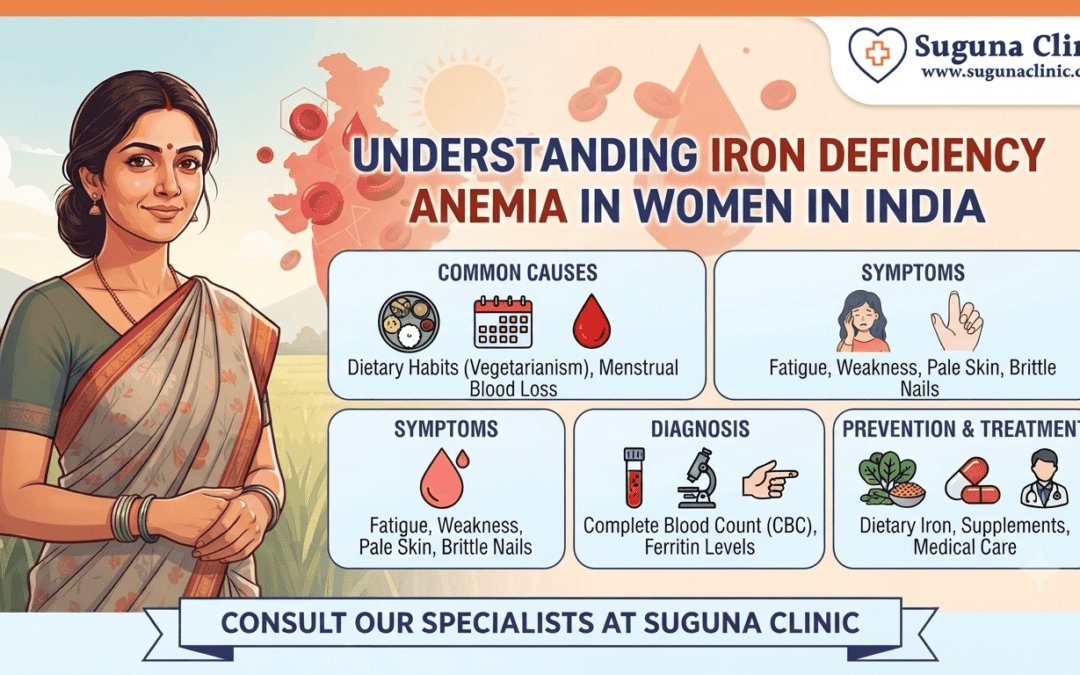
Iron deficiency anemia in women may cause tiredness, breathlessness and reduced exercise tolerance. Finding the reason for low iron matters as much as replacing it.
Quick answer: Anaemia has several causes; it does not automatically mean iron deficiency. A blood count and appropriate iron tests help guide treatment and investigation.
Why Iron Deficiency Anaemia Is So Common in Indian Women
Menstrual blood loss, pregnancy, low iron intake and impaired absorption can contribute to iron deficiency. Heavy periods deserve assessment. Anaemia can also result from B12 or folate deficiency, inflammation, inherited blood conditions and other causes; it should not be assumed to be iron deficiency.
What Iron Actually Does in Your Body
Iron is the core building block of haemoglobin, the protein in red blood cells that carries oxygen from your lungs to every tissue in your body. Without enough iron, your body makes fewer, smaller, paler red blood cells that carry less oxygen — which is why the hallmark symptom of iron deficiency is fatigue that doesn’t improve with rest. Iron is also needed for normal muscle function, immune function, and brain function, which is why deficiency causes symptoms well beyond simple tiredness.
Symptoms of Iron Deficiency
Iron deficiency progresses in stages — stores are depleted first, then blood counts fall, then symptoms become obvious. This means you can have real, measurable iron deficiency well before it shows up as classic anaemia:
| Category | Common Symptoms |
|---|---|
| Early / general | Persistent fatigue not relieved by rest, weakness, reduced exercise tolerance |
| Visible signs | Pale skin, pale inner eyelids, brittle nails, spoon-shaped nails (koilonychia) in more severe cases |
| Neurological | Headaches, dizziness, poor concentration, restless legs at night |
| Cardiovascular | Breathlessness on exertion, palpitations, a fast resting heart rate |
| Hair & skin | Increased hair shedding, dry skin |
| Unusual but classic | Pica — cravings for ice, chalk, clay, or starch; a sore, smooth tongue; cracks at the corners of the mouth |
Many women live with these symptoms for months or years, attributing them to a busy lifestyle, before a blood test reveals the cause.
Who Is Most at Risk
| Risk Group | Why |
|---|---|
| Women with heavy periods (menorrhagia) | Significant monthly iron loss that dietary intake often can’t fully replace — heavy bleeding itself deserves medical evaluation, not just iron tablets |
| Pregnant and breastfeeding women | Iron requirements roughly double during pregnancy to support the growing baby and increased blood volume |
| Adolescent girls | Growth demands combined with the onset of menstruation, often with inadequate dietary iron intake |
| Strict vegetarians and vegans | Rely entirely on poorly-absorbed non-heme iron, with no heme iron from meat or fish to offset it |
| Frequent blood donors | Each donation removes a significant amount of iron that takes weeks to months to fully replace |
| People with gut conditions | Coeliac disease, inflammatory bowel disease, and prior gut surgery all reduce iron absorption regardless of diet |
Anaemia in Men or Postmenopausal Women Needs Extra Investigation
In men and in women past menopause, there is no monthly blood loss to explain iron deficiency — so it should never be assumed to be “just diet.” Unexplained iron deficiency in these groups needs evaluation for a source of ongoing blood loss, most often from the gastrointestinal tract (such as ulcers, gastritis, or in some cases, more serious causes), before simply starting iron tablets. If this applies to you, discuss this specifically with your doctor.
Normal Haemoglobin and Ferritin Levels: What Your Report Actually Means
WHO’s 2024 anaemia cutoffs include haemoglobin below 12 g/dL for non-pregnant adult women and below 13 g/dL for adult men. In pregnancy, the cutoff is below 11 g/dL in the first and third trimesters and below 10.5 g/dL in the second. Age, altitude and the clinical setting also matter.
Ferritin helps assess iron stores, but inflammation can raise it and mask deficiency. A clinician may interpret ferritin alongside transferrin saturation and other results. A normal blood count alone does not exclude depleted iron stores.
Iron-Rich Indian Foods: What Actually Raises Your Levels
| Food | Type | Note |
|---|---|---|
| Meat, chicken and fish | Heme iron | Heme iron is generally absorbed more readily than plant iron |
| Ragi (finger millet) | Non-heme iron | A genuinely good source; regular ragi mudde, roti, or porridge helps meaningfully |
| Dals and legumes (chana, rajma, moong, masoor) | Non-heme iron | A daily staple source; pair with lemon or tomato to improve absorption |
| Palak and other leafy greens | Non-heme iron | Useful, but also contains oxalates that partly block absorption — combine with vitamin C-rich food |
| Sesame seeds (til) and jaggery (gur) | Non-heme iron | Til is a genuinely useful source; jaggery’s iron content is often overstated in common belief and shouldn’t be relied on as a primary fix |
| Dates, raisins, dried apricots | Non-heme iron | A convenient snack-time source; useful alongside, not instead of, meal-based iron |
Treatment: Oral Iron and When IV Iron Is Needed
Oral iron is often the first treatment. The formulation, dose and schedule should be chosen with a clinician, accounting for side effects and other medicines. Some patients need IV iron because tablets are ineffective, unsuitable or poorly tolerated.
Treatment commonly continues for several months to replenish iron stores, with follow-up testing. Investigate ongoing bleeding or poor absorption if recovery is inadequate. Keep iron supplements away from children.
What Happens If Untreated
- Ongoing fatigue and reduced quality of life — persistent tiredness affects work, concentration, and daily functioning
- Pregnancy complications — untreated anaemia in pregnancy is linked to premature birth, low birth weight, and increased maternal risk during delivery
- Cardiac strain — the heart works harder to compensate for reduced oxygen-carrying capacity, which matters more in those with existing heart conditions
- Impaired immunity and cognitive function — including reduced concentration and memory, particularly relevant for students and working professionals
- A missed underlying cause — treating the anaemia without asking why it developed (heavy periods, gut blood loss, dietary gaps) means it’s likely to return
When to See a Doctor
- Persistent fatigue, breathlessness, or palpitations that don’t improve with rest
- Very heavy or prolonged menstrual periods
- Pica — cravings for ice, chalk, or non-food items
- Unexplained hair shedding or brittle nails alongside tiredness
- Anaemia found on a routine blood test, especially if you are male or postmenopausal
- Pregnancy, or planning pregnancy, with a history of low iron
- No improvement despite taking iron tablets for several weeks
Seek urgent care for chest pain, fainting, severe breathlessness or heavy ongoing bleeding.
Frequently Asked Questions
Does anaemia always mean iron deficiency?
No. Other nutrient deficiencies, inflammation and inherited conditions can also cause anaemia.
Can iron stores be low with normal haemoglobin?
Yes. Ferritin and other iron tests may be needed when deficiency is suspected.
Can food alone correct iron deficiency anaemia?
Food supports recovery, but established deficiency often needs prescribed iron and investigation of its cause.
Sources and Further Reading
This article provides general health information and does not replace an individual medical assessment.