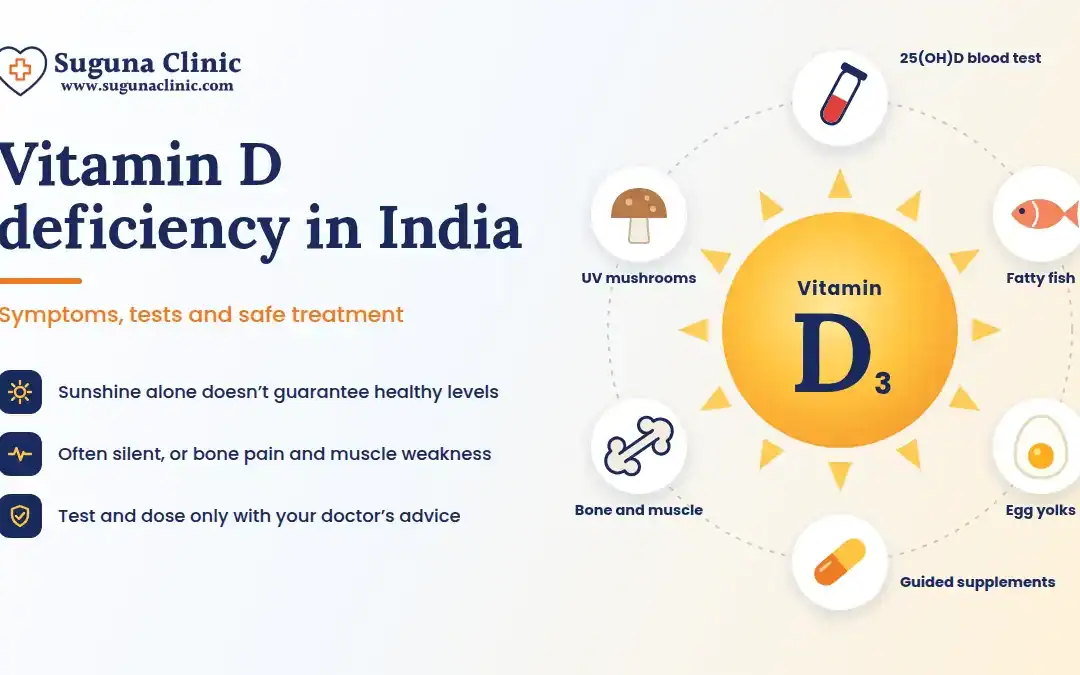
Vitamin D deficiency in India can occur despite sunny weather. Symptoms, diet, medical history and individual risk help determine whether testing or treatment is needed.
Quick answer: Vitamin D supports bone health. There is no single optimal blood level or supplement dose for everyone, and routine testing is not recommended for otherwise healthy adults.
The Sunlight Paradox: Why Vitamin D Deficiency Is So Common in India
Sunshine alone does not determine vitamin D status. Time outdoors, skin pigmentation, clothing, age, diet and some medical conditions influence it. Studies using different thresholds or testing selected patients cannot establish one deficiency rate for all Indians.
What Vitamin D Actually Does in Your Body
Vitamin D’s best-established job is helping your intestines absorb calcium and helping your bones mineralise properly — without enough of it, your body pulls calcium from your bones to keep blood calcium stable, weakening them over time. It also plays a role in muscle function, which is why deficiency often shows up as muscle weakness before it shows up as bone pain. Vitamin D receptors are also present in immune cells, and researchers continue to study its role in immune regulation, insulin sensitivity, and mood — but these associations are less firmly established than its role in bone and muscle health, and correcting vitamin D should not be seen as a standalone treatment for those conditions.
Symptoms of Vitamin D Deficiency
Deficiency may be silent or associated with bone pain and muscle weakness. Fatigue, hair loss and low mood have many possible causes and cannot diagnose low vitamin D. Persistent symptoms need assessment rather than automatic supplementation.
Who Is Most at Risk in India (and Hyderabad Specifically)
Older age, limited sun exposure, malabsorption, some medicines and chronic kidney or liver disease may affect vitamin D status. Having a risk factor does not automatically mean you need a screening test; a clinician should consider the whole clinical picture.
Normal Vitamin D Levels: What Your Report Actually Means
The usual test, when indicated, is 25-hydroxyvitamin D. Thresholds differ: the US National Academies regards 20 ng/mL or more as adequate for most people, with greater deficiency risk below 12 ng/mL. Some clinical protocols use different cutoffs. A target of 40–60 ng/mL is not a universal requirement.
Vitamin D-Rich Foods: What Actually Helps
Fatty fish, egg yolks and appropriately fortified foods contribute vitamin D. Check labels on milk, plant drinks and cereals; fortification is not universal. UV-exposed mushrooms can contribute vitamin D2. Diet alone may not correct an established deficiency.
Safe Sun Exposure: How Much You Actually Need in Hyderabad
There is no fixed number of unprotected sun minutes suitable for everyone. Avoid sunburn, excessive UV exposure and peak heat. Use sun protection; do not stop sunscreen to treat a blood test result. Food and clinician-guided supplements offer alternatives.
Treatment: How Vitamin D Deficiency Is Corrected
Routine testing is not recommended for otherwise healthy adults by the Endocrine Society’s 2024 prevention guideline. This differs from investigating symptoms or treating an established disorder.
For confirmed deficiency, a clinician chooses the dose and duration according to age, medical history and relevant blood results. Do not copy a weekly high-dose sachet schedule from another person. Review is important before continuing high doses.
Calcium and Magnesium: Why They Matter Alongside Vitamin D
A varied diet also supplies minerals needed for bone and muscle health. Do not assume that additional calcium or magnesium tablets are required; kidney disease, medicines and existing supplement intake can change what is appropriate.
What Happens If Deficiency Goes Untreated
- Osteomalacia in adults — softening of the bones, persistent bone pain, and fractures from relatively minor trauma
- Rickets in children — bowed legs, delayed growth, and skeletal deformity if uncorrected during growing years
- Increased fall and fracture risk in the elderly, driven by the muscle weakness that accompanies deficiency
- Accelerated bone density loss, compounding osteoporosis risk — particularly relevant for postmenopausal women
- Researchers are also studying associations between low vitamin D and insulin resistance, mood, and immune function — these links are real areas of active research, but are less firmly established than the bone and muscle effects, and correcting vitamin D alone should not be relied on to treat diabetes or depression
Vitamin D Toxicity: Can You Take Too Much?
Excess vitamin D supplements can raise calcium and harm the kidneys. Nausea, marked thirst, frequent urination or confusion while taking high doses need medical assessment. Avoid combining multiple vitamin D products without checking their total dose.
When to See a Doctor
- Persistent bone pain or muscle weakness.
- A fracture after a minor injury.
- A child with bowed legs or delayed motor development.
- Symptoms or concerns while taking high-dose supplements.
Frequently Asked Questions
Does everyone need a vitamin D blood test?
No. Routine testing of otherwise healthy adults is not recommended by the 2024 Endocrine Society prevention guideline.
Is 40–60 ng/mL a target for everyone?
No. Interpretation depends on the clinical context and guideline used.
Can I continue weekly high-dose sachets indefinitely?
No. The dose and duration should be reviewed by a clinician. Excess supplementation can be harmful.
Sources and Further Reading
This article provides general health information and does not replace an individual medical assessment.